In This Article
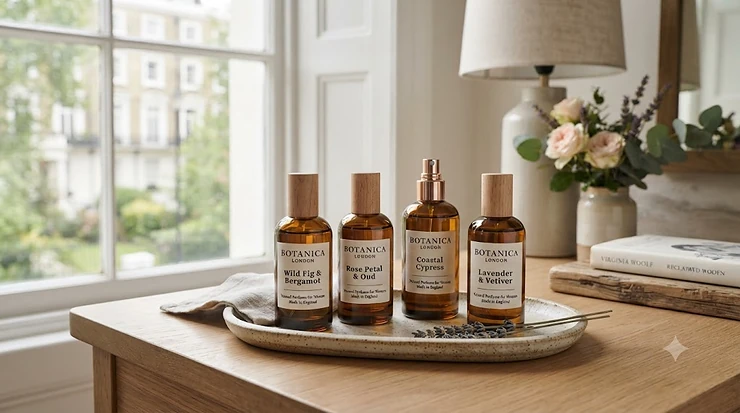
Natural perfume for women is fragrance made predominantly or entirely from plant-derived ingredients — essential oils, absolutes, resins and botanical extracts — rather than the synthetic aroma chemicals that make up most mainstream scent. It sounds like a simple swap. It is not, and anyone who’s spent an afternoon squinting at an ingredient list trying to work out whether “parfum” means lavender fields or a lab in New Jersey knows exactly what we mean.
Here’s the uncomfortable bit: there’s no legal definition of “natural” perfume anywhere in the UK or US. A brand can print “natural” in a lovely serif font on a lovely recycled box while the actual formula is 90% synthetic musk, and nobody’s checking — UK cosmetics regulation governs safety and allergen labelling, not marketing words like “natural” or “clean.” That’s not a reason to give up on the category — it’s a reason to get specific about which brands actually earn the label and which ones are borrowing it for the vibes.
We’ve gone through seven real, currently available fragrances that sit somewhere on the natural-to-clean spectrum, and we’re going to be honest about exactly where each one lands, because “honest” is doing a lot of heavy lifting in an industry that treats ingredient transparency as optional. Along the way, expect the full vocabulary of this world — organic perfume brands, clean beauty fragrance, non-toxic perfume, and the rest of the phrases you’ll meet while shopping — explained rather than assumed.
Quick Comparison Table
Here’s the market at a glance before we get into specifics. Prices shift with retailers and exchange rates, so treat these as ranges and check the current price before buying.
| Fragrance | Natural Ingredient Level | Best For | Price Range |
|---|---|---|---|
| Abel (Pink Iris / Green Cedar) | 100% natural, biotech-derived | Buyers who want zero petrochemicals, full stop | £130-£170 |
| Henry Rose | Clean, EWG Verified — not fully natural | Sensitive skin, full ingredient transparency | £70-£95 |
| Rahua Perfume Oil | 100% natural, USDA-certified organic labs | Intimate, long-lasting oil-based wear | £60-£90 |
| Flaya (Love / Imagine) | 80-92% certified organic | Budget-conscious organic perfume brands fans | £25-£35 |
| Pacifica Indian Coconut Nectar | Natural & essential oils, budget clean beauty | First-timers testing the natural perfume waters | £10-£18 |
| Skylar | Mostly safe synthetics, non-toxic and disclosed | Sensitive noses who still want longevity | £45-£65 |
| Dolma Fragrances | 100% vegan, natural-leaning | UK independents, plant-a-tree ethics | £30-£45 |
Notice that only two of these seven are genuinely, provably 100% natural — the rest sit somewhere on a spectrum from “mostly natural” to “clean, but happy to use a disclosed safe synthetic when it works better.” That’s not a scandal. It’s just the industry being honest for once, and it’s worth knowing before you spend £150 assuming every bottle on this list is pressed from a meadow.
💬 Just one click — help others make better buying decisions too!😊
Top 7 Natural Perfume for Women Picks: Expert Analysis
1. Abel — 100% natural, biotech-powered, zero petrochemicals
Abel doesn’t do the coy “natural-leaning” dance most brands do — every single ingredient across the range is derived from plants, yeast or fungi, verified and repeated across every interview the founder has given since 2013. Pink Iris leans into a fresh, classic floral built around iris and rose; Green Cedar goes the other direction entirely, twice-distilled Texas cedar meeting wild-harvested Atlas Mountain cedar for something that reads more forest floor than powder room.
Based on the spec comparison with other “natural” brands on this list, what actually sets Abel apart is the biotech angle — instead of relying purely on traditional extraction (which gets expensive and inconsistent fast), they’ve paired master perfumers with biotechnology to create plant-derived scent molecules that behave more predictably than a straight essential oil blend. Reviewers consistently note the longevity holds up surprisingly well for a 100% natural formula, which has historically been the category’s weak spot, since synthetic fixatives are what make mainstream perfume cling to your wrist until bedtime.
Here’s what to weigh: this is a genuinely premium price point, and the honest answer to “is it worth it” depends entirely on whether “zero petrochemicals, verified” is a line in the sand for you or a nice-to-have.
Pros:
- ✅ Fully verified 100% natural formula, no synthetic filler ingredients
- ✅ Longevity that competes with mainstream synthetic perfumes
- ✅ Available through UK stockists with straightforward delivery
Cons:
- ❌ Sits at the top of this list’s price range by a clear margin
- ❌ Natural sourcing means occasional batch-to-batch scent variation
At around £130-£170 for a full 50mL bottle, Abel isn’t an impulse buy, but it’s arguably the cleanest case on this entire list for what “natural perfume for women” is supposed to mean.
2. Henry Rose — EWG Verified, radically transparent, honestly clean rather than fully natural
Let’s be straight about this one, because the honesty matters more than the marketing: Henry Rose is not a 100% natural perfume, and to their enormous credit, they’ve never claimed to be. What they’ve done instead is publish the entire ingredient list — including the safe synthetics — and earn EWG Verified status and Cradle to Cradle Gold certification for it, which is a meaningfully higher bar than “clean” usually clears.
Founded by Michelle Pfeiffer with perfumer Patricia Choux involved in the newer scents, Dave (a warm vanilla gourmand) and Dark Is Night (green grass and vetiver, genuinely earthy) both include a documented mix of natural and synthetic molecules, all individually named and none of them on EWG’s hazard list. Reviewers on the brand’s own product pages describe the scents as fresh and grounded rather than the sweet-and-heavy profile a lot of “clean” perfume defaults to, and the disclosed ingredient philosophy means you can actually check for a personal trigger before you buy, rather than guessing.
Based on the spec comparison with Abel, the trade-off here is precision versus purity — Henry Rose uses safe synthetics specifically because they’re more stable and consistent than some natural alternatives, and full disclosure means you know exactly what that trade-off involves.
Pros:
- ✅ Every ingredient individually disclosed, EWG Verified and Cradle to Cradle Gold
- ✅ Free from parabens, phthalates and sulfates with genuine documentation
- ✅ Sustainable, minimalist packaging using recycled glass
Cons:
- ❌ Not a natural perfume in the strict sense — contains disclosed safe synthetics
- ❌ Slightly clinical unboxing experience compared with more artisan competitors
At roughly £70-£95, Henry Rose earns its place on this list for radical transparency, not for being the most “natural” option here — a distinction worth making before you buy.
3. Rahua Perfume Oil — organic, plant-based, intimate rollerball wear
Rahua takes a genuinely different approach to the whole category: instead of an alcohol-based spray, this is a concentrated oil perfume in a rollerball, formulated with pure plant essential oils and manufactured in USDA-certified organic labs. The “symbiotic” ingredients — grown in undisturbed areas of the Amazon rainforest and harvested using indigenous knowledge — aren’t just a nice origin story; they’re part of what gives the oil its distinctive, slightly resinous depth that alcohol-based sprays rarely achieve.
What most buyers overlook about oil perfumes generally is that they behave completely differently on skin than sprays do — no alcohol means no initial “burst” of top notes, and the scent stays closer to the skin rather than filling a room, which reviewers consistently describe as more intimate and personal rather than a statement scent for other people to notice across an office. Based on the spec comparison with alcohol-based naturals like Abel, oil perfumes like Rahua typically last longer directly against skin but project less, which is either exactly what you want or precisely the opposite, depending on your reason for wearing scent at all.
Pros:
- ✅ USDA-certified organic manufacturing with fully plant-based formula
- ✅ Oil base means genuinely long-lasting, close-to-skin wear
- ✅ Sourcing model supports indigenous Amazon communities directly
Cons:
- ❌ Low projection means it won’t fill a room the way a spray does
- ❌ Oil format requires reapplication technique some users need to learn
Typically priced around £60-£90 for a rollerball, Rahua rewards buyers who want a natural fragrance that reads as personal rather than public.
4. Flaya — UK-made, 80-92% certified organic, genuinely small-batch
Flaya is what happens when “small family business” isn’t just a marketing line — this is a mum-and-daughters operation handmaking every bottle in Scotland, and the certification backing it up (NFCC, part of the Organic Food Federation) is a genuine third-party check rather than a brand’s own say-so. Depending on the specific scent, Flaya perfumes run 80-92% certified organic ingredients, with the remaining percentage made up of naturally derived fragrance compounds rather than synthetic filler.
Love (crisp summer nectar and exotic blossom) and Imagine (light, powdery, lavender-led) both list their full ingredient breakdown openly, including the specific natural aromatic compounds present in the fragrance blend — a level of disclosure that budget and mid-tier perfume brands rarely bother with. Reviewers describe the scents as noticeably more delicate and skin-close than mainstream perfume, which tracks with the genuinely organic formulation, and the brand’s Ethical Consumer Best Buy Label adds a layer of independent scrutiny beyond the organic certification itself.
Based on the spec comparison with premium naturals like Abel, Flaya proves you don’t need a three-figure price tag to get a genuinely, provably organic UK-made perfume — you just need to know where to look, since brands this size rarely have the marketing budget of the bigger clean-beauty names.
Pros:
- ✅ Independently certified 80-92% organic ingredients, disclosed per scent
- ✅ Handmade in small batches in Scotland with full traceability
- ✅ Genuinely affordable relative to certified organic perfume brands elsewhere
Cons:
- ❌ Small-batch production means limited stock on popular scents
- ❌ Less brand recognition than bigger clean-beauty names, despite comparable credentials
At £25-£35 for a 30mL bottle, Flaya is arguably the best value-for-transparency pick among genuinely organic perfume brands covered here.
5. Pacifica Indian Coconut Nectar — budget-friendly, vegan, an easy first step into clean fragrance
Pacifica sits at the accessible end of this list, and it’s worth being honest about what that means: the ingredient list shows “parfum” as Pacifica’s own proprietary blend of natural and essential oils rather than a fully itemised breakdown, so it’s a clean beauty fragrance rather than a strictly natural one in the way Abel or Rahua are. What it does deliver, consistently and cheaply, is a genuinely vegan, cruelty-free, phthalate- and paraben-free formula built on natural grain alcohol.
Indian Coconut Nectar leans tropical-gourmand — coconut water, vanilla absolute, a hint of amber — and reviewers describe it as a light, layerable everyday scent rather than a heavy statement fragrance, lasting roughly two to four hours directly on skin before needing a top-up. Based on the spec comparison with the more rigorously verified options on this list, Pacifica is best understood as an entry point: a genuinely low-risk way to test whether you actually prefer the softer, less synthetic-heavy profile that natural-leaning perfume tends to have, before committing real money to something like Abel or Rahua.
Pros:
- ✅ Genuinely vegan, cruelty-free, phthalate and paraben-free formula
- ✅ Low price makes it an easy way to trial the natural-perfume category
- ✅ Recyclable glass packaging and mood-focused scent design
Cons:
- ❌ “Parfum” blend isn’t itemised, so it’s clean rather than strictly natural
- ❌ Shorter wear time than oil-based or more concentrated alternatives
At £10-£18, Pacifica is the lowest-stakes way onto this entire list, and a genuinely sensible starting point if you’re new to the whole category.

6. Skylar — non-toxic, disclosed, built for sensitive skin
Skylar occupies a specific and useful niche: it’s not marketed as a natural perfume, but as a non-toxic one, and the distinction is worth understanding rather than glossing over. The formula is almost entirely non-toxic synthetic ingredients chosen specifically because they’re hypoallergenic and free of the roughly 1,300 questionable substances the brand explicitly screens out — phthalates, parabens, and known skin sensitisers among them.
Reviewers consistently point to Skylar’s sensitive-skin credentials as the actual selling point rather than any natural-ingredient claim, and that’s a genuinely different value proposition from Abel or Flaya — Skylar is betting that a carefully chosen safe synthetic causes fewer reactions for more people than a natural essential oil blend would, since essential oils themselves are a well-documented cause of contact allergies. Based on the spec comparison with the more strictly natural options here, Skylar’s FSC-certified recyclable packaging and monthly charitable giving programme give it genuine clean-beauty credentials even though the ingredient philosophy is deliberately different from a botanical-first brand.
Pros:
- ✅ Formulated specifically to minimise sensitivities and skin reactions
- ✅ Fully recyclable packaging with monthly charitable donations
- ✅ Longevity benefits from stable synthetic ingredients over pure botanicals
Cons:
- ❌ Not a natural perfume by any definition — a clean synthetic formula instead
- ❌ Buyers specifically seeking botanical-only ingredients should look elsewhere on this list
Priced around £45-£65, Skylar is the right pick specifically for anyone whose priority is avoiding known irritants rather than avoiding synthetics as a category.
7. Dolma Fragrances — British independent, vegan, one tree planted per sale
Dolma has been operating quietly since 1982, which in an industry obsessed with launch hype is genuinely unusual, and the brand’s entire range is 100% vegan and cruelty-free with a straightforward one-tree-per-sale environmental commitment rather than a vague sustainability statement. Samples start from a genuinely accessible £3.50, which makes Dolma one of the lowest-barrier ways to actually smell a natural-leaning British perfume before committing to a full bottle.
What most buyers overlook is that Dolma’s Amazon-stocked 50mL bottles are typically priced meaningfully below the brand’s direct site, which is a rare instance of the marketplace actually working in the customer’s favour rather than the reverse. Based on the spec comparison with the international brands on this list, Dolma’s positioning is straightforwardly practical rather than glossy — no biotech story, no celebrity founder, just four decades of a small British company making plant-leaning vegan scent and planting trees along the way.
Pros:
- ✅ 100% vegan, cruelty-free formulation with a genuine environmental tie-in
- ✅ Extremely accessible £3.50 samples lower the barrier to trying it
- ✅ Long-established British brand with four decades of formulation experience
Cons:
- ❌ Less rigorous third-party certification than Flaya’s organic-verified range
- ❌ Brand presentation is noticeably less polished than newer clean-beauty labels
At around £30-£45 for a full bottle, Dolma is a solid, unglamorous, genuinely values-led pick for anyone who wants British-made without the premium markup.
Practical Usage Guide: Getting the Most From Natural Perfume for Women
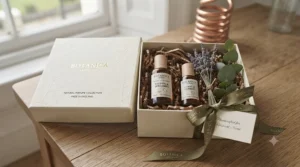
Natural perfume behaves differently on skin than mainstream synthetic fragrance, and the single biggest mistake people make switching over is expecting identical projection and longevity — it’s a different tool, not a lesser one. Apply to moisturised skin rather than dry: natural formulas in particular need the extra grip that hydrated skin provides, since they typically lack the synthetic fixatives that help mainstream perfume cling to dry skin for eight-plus hours.
Pulse points still matter, but with natural and oil-based perfumes specifically, consider applying to “cool points” instead — the insides of elbows, behind knees — since these areas run slightly cooler and slow the rate of evaporation, meaningfully extending how long a natural scent actually lasts. Layering is your friend here: a natural perfume applied to hair and clothing (rather than only skin) tends to last considerably longer than skin application alone, since fabric holds scent molecules more readily than skin does.
Common first-timer mistakes include rubbing rather than dabbing after application (this bruises the top notes and speeds up evaporation), storing bottles in direct sunlight or a steamy bathroom (heat and UV genuinely degrade natural ingredients faster than synthetic ones), and giving up on a scent after ten minutes because the initial burst has faded — natural perfume’s dry-down, the stage after the top notes evaporate, is often where the actual character of the fragrance lives.
Real-World Scenarios: Matching the Right Natural Perfume to Your Life
If you’re new to the category and genuinely unsure whether you’ll prefer the softer, less synthetic-forward profile of natural fragrance, starting with something like Pacifica at £10-£18 is the financially sensible move — it’s specifically designed as an accessible entry point, and if the whole category isn’t for you, you haven’t lost much finding that out.
If you have documented sensitivities or a history of skin reactions to mainstream perfume, and you want the most rigorously screened option rather than the most “natural” one, Skylar’s disclosed non-toxic synthetics or Henry Rose’s EWG Verified formula are the more sensible picks over a pure essential-oil blend — ironically, because essential oils themselves are a well-known allergen category, “natural” and “least likely to cause a reaction” aren’t automatically the same thing.
If you’ve done your homework, know you want genuinely botanical ingredients with real third-party verification, and you’re prepared to pay for it, Abel and Rahua sit at the top of this list for a reason — verified 100% natural formulations with the R&D or organic certification to back the claim up, rather than just the word “natural” printed somewhere on the box.
Common Problems With Natural Perfume for Women (And How to Solve Them)
Problem: the scent seems to disappear within an hour. This is normal for natural and oil-based formulas, which typically lack synthetic fixatives — apply to moisturised skin, layer onto hair and clothing, and consider a rollerball oil format like Rahua’s if longevity on skin specifically matters most to you.
Problem: you’re not sure if a “natural” claim is genuine. Check for full ingredient disclosure rather than just the word “natural” on packaging — brands like Abel, Flaya and Rahua publish detailed breakdowns and hold third-party certifications, while vaguer claims without backing evidence are the clearest red flag in this entire category.
Problem: a natural perfume triggered a skin reaction. Essential oils are a genuinely documented allergen category — the NHS lists fragrances among the most common causes of allergic contact dermatitis — so a reaction to a natural formula doesn’t necessarily mean synthetic fragrance is the safer choice for you specifically; patch testing any new perfume, natural or not, on a small area of skin before full application is the sensible universal precaution.
Problem: the scent smells different on you than it did on a friend. This is expected and specific to natural and plant-based perfume, since these formulas interact with individual skin chemistry more noticeably than heavily synthetic fragrances do — it’s a feature of the category, not a fault with the bottle.
Problem: you can’t find a genuinely non-toxic option that also lasts all day. This is a real trade-off across the category — Skylar and Henry Rose both prioritise longevity through carefully disclosed, screened synthetics specifically because pure natural formulas often can’t match mainstream wear time, so choosing between the two priorities is sometimes unavoidable.
What Is Natural Perfume for Women, and How Is It Different From “Clean”?
Natural perfume for women is fragrance formulated predominantly or entirely from plant-derived ingredients — essential oils, absolutes, resins and botanical extracts — as opposed to synthetic aroma chemicals, which make up the majority of mainstream perfume. “Clean” is a related but genuinely different term: it typically means free from specific harmful ingredients (parabens, phthalates, certain synthetic musks) while still permitting safe synthetics, which is why a “clean beauty fragrance” like Henry Rose or Skylar can be entirely legitimate without being natural in the strict sense.
The distinction matters because the two terms get used almost interchangeably in marketing, and knowing which one a brand is actually claiming — and whether they back it up with disclosed ingredients or third-party certification — is the single most useful piece of label-reading skill in this entire category.
How to Choose a Genuine Natural Perfume: 7 Steps
- Look for full ingredient disclosure, not just the word “natural.” Brands like Abel, Flaya and Rahua publish detailed breakdowns; vague “parfum” listings with no further detail are the clearest warning sign.
- Check for genuine third-party certification. NFCC organic certification (Flaya), USDA organic manufacturing (Rahua), or EWG Verified status (Henry Rose) all mean an outside body checked the claim, rather than the brand grading its own homework.
- Decide whether “natural” or “non-toxic” actually matters more to you. If sensitivity is your main concern, a disclosed safe-synthetic formula like Skylar’s may genuinely serve you better than a botanical blend, since essential oils are a documented allergen category.
- Match the format to how you want the scent to behave. Alcohol-based sprays like Abel project further; oil-based formats like Rahua stay closer to skin and last longer there specifically.
- Budget realistically for genuine natural formulation. Truly botanical, verified perfume tends to cost more than synthetic-heavy alternatives because natural raw materials are expensive and inconsistent to source at scale.
- Read genuine review sentiment on longevity expectations. Reviewers across natural brands consistently note shorter wear time than mainstream perfume — this is a category-wide trade-off, not a defect specific to one brand.
- Patch test before full application, regardless of brand. Natural doesn’t automatically mean hypoallergenic, and a small skin test avoids discovering a sensitivity on your wrist in the middle of a workday.
Organic Perfume Brands: What “Organic” Actually Certifies
The word organic perfume brands throws around most confidently means something specific when it’s backed by certification, and considerably less when it isn’t. Flaya’s NFCC certification (part of the Organic Food Federation) verifies 80-92% certified organic ingredients per scent, a genuinely audited figure rather than a marketing estimate, while Rahua’s USDA-certified organic manufacturing facilities apply the same rigour to a plant-based oil format.
What most buyers overlook is that “organic” specifically refers to how the plant ingredients were farmed — free from synthetic pesticides and fertilisers — rather than being a synonym for “natural” or “non-toxic,” so an organic perfume can theoretically still include some synthetic components, and a fully natural perfume isn’t automatically organic unless the raw materials themselves were organically farmed and certified as such.
✨ Don’t Miss These Exclusive Deals!
🔍 Find your new signature scent among these genuinely natural and clean fragrance picks. Click on any highlighted option to check current pricing and availability — your skin (and your sense of smell) will thank you for reading the label first!
Clean Beauty Fragrance vs Non-Toxic Perfume: Untangling the Terms
Clean beauty fragrance and non-toxic perfume get used as if they’re interchangeable, and honestly, in most marketing copy, they might as well be — but there’s a useful distinction worth making. “Clean” generally refers to a formulation philosophy: avoiding a specific, growing list of ingredients considered undesirable (certain preservatives, synthetic musks, specific plasticisers) while still allowing well-tested synthetics that pass that screen, which is exactly the approach Henry Rose and Skylar both take.
“Non-toxic,” meanwhile, is a slightly broader safety claim, generally meaning free from ingredients linked to hormone disruption, sensitisation or other documented health concerns, and it’s a claim both natural brands (Abel, Rahua) and disclosed-synthetic brands (Skylar, Henry Rose) can legitimately make simultaneously. Based on the spec comparison across this list, the practical takeaway is that “clean” and “non-toxic” are safety-and-formulation philosophies that sit alongside the natural-versus-synthetic question, rather than being simply another word for “natural” — a genuinely clean perfume can still contain synthetic ingredients, and that’s not a contradiction.
Eco-Friendly Scent: Looking Beyond the Bottle’s Contents
An eco-friendly scent’s credentials extend well past what’s inside the bottle, and this is where several brands on this list genuinely differentiate themselves from the ingredient conversation entirely. Dolma’s one-tree-per-sale model and Pacifica’s recyclable glass packaging both address environmental impact independently of whether the fragrance itself is natural, while Abel’s carbon-offset shipping and eco-friendly packaging tackle the supply-chain side of sustainability specifically.
What most buyers overlook is that a genuinely natural formula and a genuinely eco-friendly production process are two separate achievements — a brand can nail one without the other, so a truly eco-friendly scent pick generally means checking packaging recyclability, carbon offsetting, and sourcing ethics as a distinct checklist from the ingredient-purity question covered elsewhere in this guide.
Plant-Based Perfume: Reading an Ingredient List Like a Perfumer
Plant-based perfume ingredient lists reward a bit of pattern recognition once you know what you’re looking for. Genuine natural formulas list specific botanical sources by name — rose absolute, iris root, cedar oil — rather than hiding behind a single umbrella “parfum” or “fragrance” entry, which is precisely why Abel’s and Flaya’s full breakdowns stand out against vaguer competitors.
Watch specifically for “alcohol denat.” paired with natural-sounding botanical names further down the list — this usually indicates the base carrier rather than a red flag, since even fully natural perfumes need an alcohol or oil medium to actually carry the scent onto skin. What genuinely matters more than any single ingredient name is whether the brand discloses the full blend at all; a short, vague list is a bigger warning sign than a long, specific one.
Natural Ingredient Fragrance: The Trade-Offs Nobody Mentions in the Marketing
A natural ingredient fragrance genuinely does things mainstream synthetic perfume can’t — evolve more distinctly on individual skin chemistry, avoid documented synthetic musk accumulation concerns, and rely on renewable plant sourcing rather than petrochemical derivatives. It also, honestly, comes with trade-offs that clean-beauty marketing tends to skip past: shorter average wear time, batch-to-batch scent variation as raw material harvests differ, and generally higher pricing, since natural raw materials cost more and yield less consistently than synthetic equivalents manufactured at scale.
Based on the spec comparison across this entire list, brands that are upfront about these trade-offs — Abel discussing sediment as a natural, harmless occurrence rather than a flaw; Rahua being explicit about lower projection — are generally the more trustworthy ones, since a brand willing to name the downsides of natural formulation is usually being straight about the upsides too.
Green Beauty Scent: Long-Term Value and What You’re Actually Paying For
A green beauty scent purchase is rarely just paying for the liquid in the bottle — you’re also paying for certification audits, ethical sourcing relationships, and smaller-batch production runs that cost more per unit than mass-manufactured mainstream perfume. Looking at this list’s price spread, the £10-£18 Pacifica sits at one extreme and £130-£170 Abel at the other, and the honest answer for most people is that value depends entirely on which specific credential — organic certification, EWG verification, USDA organic manufacturing — actually matters to your own priorities, rather than there being one objectively “best value” pick across the whole category.
Genuine review sentiment across brands at every price point in this guide suggests that satisfaction correlates more strongly with matching format (spray versus oil) and scent profile to personal preference than with price point alone — independent editorial reviews of the natural perfume category consistently make the same point — a well-chosen £15 Pacifica pick can outperform a poorly-matched £150 Abel bottle in terms of actual day-to-day enjoyment, which is worth remembering before assuming price is the only signal of quality here.
Frequently Asked Questions
❓ Is natural perfume actually better for sensitive skin than synthetic?
❓ Why does natural perfume smell different on everyone?
❓ How can I tell if a 'natural' perfume claim is genuine?
❓ Does natural perfume really last less time than regular perfume?
❓ Is 'clean' the same thing as 'natural' when it comes to fragrance?
Conclusion
The honest truth about natural perfume for women is that the category rewards exactly the kind of label-reading most of us skip past on a busy shopping trip. Genuine botanical formulations like Abel and Rahua exist, verified and worth the premium if that’s what you actually want; equally legitimate clean alternatives like Henry Rose and Skylar exist for people whose real priority is disclosed safety rather than plant-only ingredients, and there’s nothing lesser about choosing that instead.
What actually separates a good purchase from a disappointing one here isn’t the price tag or the prettiest packaging — it’s whether the brand backs its claims with real disclosure and real certification, the way Flaya, Abel and Rahua all do, rather than leaning on a word with no legal definition and hoping nobody checks. Read the list, patch test the wrist, and let the actual ingredients — not the font on the box — make the decision for you.
✨ Ready to Find Your Signature Scent?
🔍 Compare current prices on the natural or clean fragrance that matches what you’re actually looking for, and check availability before your favourite scent sells out. The right bottle could be the one thing on your vanity that finally feels like it aligns with your values, not just your Instagram feed!
Recommended for You
- 7 Best Date Night Perfume Women That Actually Work (2026)
- Wedding Perfume for Bride: 7 Unforgettable Scents for 2026
- Perfume Gift Guide for Her: 7 Best Sets Reviewed for 2026
Disclaimer: This article contains affiliate links. As an Amazon Associate, I earn from qualifying purchases. If you purchase products through these links, we may earn a small commission at no additional cost to you.
✨ Found this helpful? Share it with your friends! 💬🤗
