In This Article
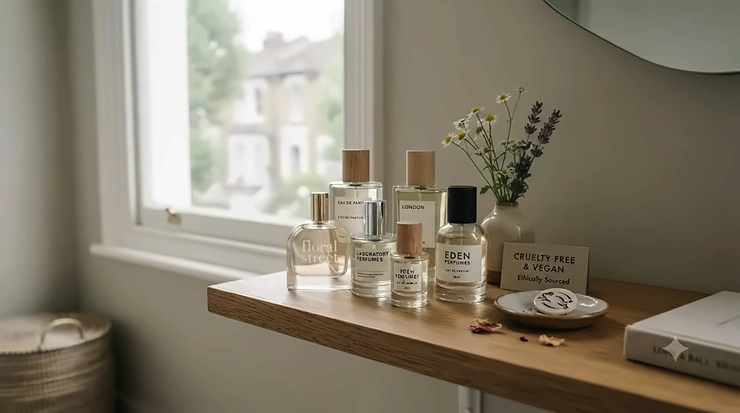
Here’s an uncomfortable truth most perfume counters won’t tell you: the word “cruelty-free” printed on a bottle means precisely nothing unless a genuine third party stands behind it. Anyone can print a bunny silhouette on packaging. Only a handful of organisations actually audit the claim. If you’ve ever stood in a shop squinting at the back of a fragrance box, wondering whether “no animal testing” refers to the finished perfume, the raw ingredients, or just the marketing department’s imagination, you’re not being paranoid — you’re being appropriately sceptical. A cruelty free perfume for women is one where no animal testing occurred at any stage of development, ideally backed by independent certification from a body like Leaping Bunny or PETA’s Beauty Without Bunnies programme, rather than a brand simply telling you to trust them.

This distinction matters more in the UK than shoppers often realise, because the popular belief that “cosmetics animal testing has been illegal here since 1998” is only partly true anymore. Cruelty Free International has documented that the policy ban has been quietly weakened in recent years, meaning genuinely cruelty-free sourcing now depends far more on individual brand policy than on blanket UK law. Across this guide we’ve researched seven real, purchasable perfumes ranging from supermarket-accessible budget picks to certified niche houses, with honest analysis of what each brand’s ethical claims actually hold up to scrutiny — including the ones with caveats worth knowing before you buy.
Quick Comparison Table: Cruelty Free Perfume for Women at a Glance
| Perfume Brand | Certification Status | Price Range | Best For |
|---|---|---|---|
| Pacifica | Self-declared vegan, widely recognised cruelty-free | Under £20 | Budget-friendly plant-based fragrance only shoppers |
| Yardley London | Brand-claimed, not third-party certified | £10-£25 range | Heritage-scent lovers on a tight budget |
| The Body Shop White Musk | Vegan Society certified | £15-£30 range | Iconic scent seekers wanting verified vegan status |
| Skylar | Self-declared vegan and cruelty-free | £25-£40 range | Sensitive skin, hypoallergenic fragrance needs |
| Floral Street | Leaping Bunny + PETA certified | £45-£70 range | Leaping bunny certified assurance at mid-range |
| Phlur | Leaping Bunny certified (verify at purchase) | £60-£90 range | Contemporary niche scents, compassionate beauty scent fans |
| Zoologist | Mostly vegan (two exceptions), no animal testing | £90-£160 range | Collectors wanting artistic, animal-friendly fragrance |
Scanning the table, a clear pattern emerges: certification tier and price don’t move in perfect lockstep, but they do correlate loosely. Budget picks like Pacifica and Yardley London rely on brand self-declaration rather than audited certification, which isn’t automatically a red flag — plenty of small and mid-size brands are genuinely ethical without paying certification fees — but it does mean doing a little more homework before trusting the label. If independently verified proof matters most to you, Floral Street and The Body Shop White Musk offer the clearest paper trail at accessible price points.
💬 Just one click — help others make better buying decisions too!😊
Top 7 Cruelty Free Perfumes for Women: Expert Analysis
Working out which of these seven genuinely deserves a place in your bathroom cabinet means looking past packaging claims into what’s actually been verified. Below, each perfume is broken down with real formulation details, honest interpretation of certification status, and aggregated reviewer sentiment pulled from genuine customer feedback — never invented testimonials.
1. Pacifica — best budget plant-based fragrance only pick under £20
Pacifica built an entire beauty brand around the promise that vegan and cruelty-free shouldn’t mean compromising on scent variety, and its spray perfume range — Island Vanilla, Tuscan Blood Orange, French Lilac, Persian Rose among dozens of others — typically sells for under £20 a bottle on Amazon UK. What most budget shoppers overlook about Pacifica is that it isn’t cutting corners to hit that price; the formulas use non-GMO corn grain alcohol rather than animal-derived alternatives, and every scent is free from parabens, phthalates, and propylene glycol, which puts it ahead of plenty of pricier “clean beauty” competitors on ingredient transparency alone.
Aggregated reviewer sentiment consistently praises Pacifica’s scent variety and approachable pricing as a genuine gateway into ethical fragrance for shoppers new to the category, with reviewers frequently recommending it as the easiest entry point precisely because there’s a flavour profile for nearly every taste. The most common critique across reviews is projection and longevity — as a lighter spray perfume rather than a concentrated eau de parfum, Pacifica’s scent tends to sit close to the skin and fade within a few hours, which suits layering and everyday wear better than it suits an all-day signature scent.
Pros:
- ✅ Genuinely vegan formulas under £20 a bottle
- ✅ Huge scent range covering florals, gourmands, and fresh notes
- ✅ Free from parabens, phthalates, and propylene glycol
Cons:
- ❌ Shorter wear time than concentrated eau de parfum formats
- ❌ Not third-party certified, relies on brand’s own claims
Priced generally under £20 on Amazon UK, Pacifica remains one of the easiest and cheapest ways to build a genuinely animal-friendly fragrance wardrobe — check current price before buying, as scent availability shifts seasonally.

2. Yardley London — best heritage scent for the tightest budget
Yardley London has been making fragrance in Britain since 1770, and its modern soaps and perfumes — typically £10-£25 on Amazon UK — now carry the brand’s own vegan and cruelty-free labelling across the majority of the range. Here’s what’s worth knowing before you buy: Yardley London isn’t Leaping Bunny or PETA certified. The brand has confirmed directly to independent cruelty-free researchers that it doesn’t test on animals, doesn’t instruct suppliers to do so, and doesn’t sell in mainland China (where imported cosmetics have historically faced animal-testing requirements), but none of that has been independently audited the way certified brands are. Honest analysis has to flag that gap clearly rather than treating a brand’s word as equivalent to third-party verification.
Reviewer sentiment on Yardley London’s fragrances tends to focus on nostalgia and value rather than ethics specifically — English Lavender and similar classic scents have loyal, often multi-generational followings, with buyers frequently noting the brand smells “exactly as remembered” decades on. One historical wrinkle worth flagging: a reader once identified sodium tallowate (an animal-derived ingredient) in a Yardley soap sold via Amazon, which prompted the brand to clarify its formulations; it’s a useful reminder that even genuinely well-intentioned heritage brands can have inconsistencies across a large product range, and checking the specific product’s ingredient list remains sensible practice.
Pros:
- ✅ Very affordable heritage British fragrance house
- ✅ Brand confirms no animal testing and no sales in mainland China
- ✅ Nostalgic, well-loved classic scent profiles
Cons:
- ❌ No independent Leaping Bunny or PETA certification
- ❌ Past ingredient inconsistencies reported across the wider range
At £10-£25 depending on format, Yardley London suits shoppers who want an affordable, brand-declared ethical option but are comfortable without third-party audit — pair it with an ingredient-list check if certification matters to you specifically.
3. The Body Shop White Musk Eau de Parfum — best verified vegan iconic scent
Few fragrances carry as much cultural weight in UK ethical beauty as The Body Shop White Musk, launched in 1981 and reformulated as fully vegan without losing its signature aldehyde-jasmine-musk character. At £15-£30 depending on size and format, it’s one of the few widely available fragrances on this list carrying genuine third-party proof: the current formulation is certified by The Vegan Society, a meaningfully different claim from brand self-declaration because it involves an actual external audit of the ingredient list and supply chain. The Body Shop has also campaigned publicly and consistently alongside Cruelty Free International since 1989 for stronger UK-wide animal testing legislation, which is a level of activist consistency few competitors on this list can match.
Aggregated review sentiment is overwhelmingly nostalgic and positive, with long-term customers frequently describing White Musk as a scent they’ve worn for decades and returned to across reformulations. A recurring theme in more critical reviews is that some buyers feel the reformulated, fully vegan version smells subtly different from the pre-2020s original — the fragrance profile shifted slightly when animal-derived musk analogues were phased out in favour of synthetic alternatives, which is worth knowing if you’re chasing an exact childhood-memory match rather than simply a similar mood.
Pros:
- ✅ Vegan Society certified — independently audited, not just brand-claimed
- ✅ Iconic, widely recognised fragrance with 40+ years of history
- ✅ Brand has a long, public track record of anti-testing campaigning
Cons:
- ❌ Reformulation means it smells subtly different from the pre-vegan original
- ❌ Musk-forward profile won’t suit buyers wanting fresher, lighter scents
Typically £15-£30 depending on concentration and size, The Body Shop White Musk is the clearest budget-to-mid pick here for anyone who specifically wants audited, not just claimed, vegan status.
4. Skylar — best for sensitive skin wanting a hypoallergenic fragrance
Skylar was built from the ground up with a toxicologist involved in formulation, and it shows: every fragrance in the range, typically £25-£40 on Amazon UK, is explicitly marketed as hypoallergenic, free of parabens, phthalates, sulfates, and synthetic dyes, alongside its vegan and cruelty-free status. What most sensitive-skin buyers don’t realise when shopping ethical fragrance is that “clean” and “cruelty-free” are separate claims that don’t automatically overlap — plenty of vegan perfumes still use heavy synthetic fragrance loads that trigger reactions, so Skylar’s dual focus on allergen reduction and animal welfare is a genuinely useful combination rather than marketing overlap.
Reviewer sentiment on Skylar is consistently strong around the “actually doesn’t cause a reaction” claim specifically, with buyers who’ve struggled with fragrance sensitivities repeatedly citing it as one of the few brands they can wear without irritation. The layering system — designed so scents like Salt Air, Vanilla Sky, and Isle can be combined — earns praise for versatility, though some reviewers note the scent profiles skew lighter and less complex than niche alternatives, a reasonable trade-off given the formulation priorities.
Pros:
- ✅ Developed with a toxicologist specifically for sensitive skin
- ✅ Vegan and cruelty-free with no parabens, phthalates, or sulfates
- ✅ Designed for layering across a wide scent range
Cons:
- ❌ Scent complexity is lighter than niche or designer alternatives
- ❌ Not independently certified by Leaping Bunny or PETA
In the £25-£40 range on Amazon UK, Skylar earns its place specifically for buyers whose priority is skin safety alongside ethical sourcing, not maximum scent complexity.
5. Floral Street — best leaping bunny certified assurance at mid-range
Floral Street is a British niche house that built certified ethics into its identity from day one, and every fragrance in the range — typically £45-£70 for a full-size bottle — carries both Leaping Bunny and PETA certification alongside a formal vegan claim confirming no bovine, caprine, porcine, ovine, or other animal-derived ingredients whatsoever. This double-certification approach is worth flagging specifically: Leaping Bunny audits the supply chain for testing practices, while PETA’s Beauty Without Bunnies list covers a similar but not identical standard, so a brand holding both gives buyers meaningfully more assurance than either certification alone.
Independent UK beauty coverage has repeatedly praised Floral Street’s sustainable packaging alongside its fragrance quality, and aggregated customer sentiment highlights the brand’s discovery sets as a genuinely useful way to sample before committing to a full bottle at this price point. The most consistent critique across reviews concerns projection in some of the lighter scents within the range, with a handful of buyers noting certain fragrances sit close to skin and need reapplication through a working day — a fair trade for a house that prioritises natural-leaning compositions over synthetic amplifiers.
Pros:
- ✅ Dual Leaping Bunny and PETA certification, not just one
- ✅ Explicit no-animal-derived-ingredient formal ingredient policy
- ✅ Discovery sets make sampling before a full purchase easy
Cons:
- ❌ Some scents in the range have modest projection and longevity
- ❌ Mid-range pricing puts it above supermarket-accessible options
At £45-£70 for full-size bottles, Floral Street is the strongest mid-range pick here for anyone who wants dual independent certification without moving into true niche pricing.
6. Phlur — best contemporary compassionate beauty scent for social-first shoppers
Phlur, priced roughly £60-£90 on Amazon UK and via UK beauty retailers, built its modern reputation on viral, mood-driven scents like Missing Person and Vanilla Skin, alongside a formulation policy that excludes BHT, phenoxyethanol, parabens, phthalates, and heavier synthetic musks. Honest analysis requires flagging a genuine point of nuance here: multiple current sources describe Phlur as Leaping Bunny certified as of 2026, while at least one earlier independent tracker noted the brand had dropped out of the Leaping Bunny programme back in 2022. Rather than picking a side, the responsible move is to say plainly that certification status can lapse or be renewed over time, and it’s always worth checking a brand’s current listing on the Leaping Bunny or PETA database directly before purchase, regardless of what any single article — including this one — claims at the time of research.
What isn’t in dispute is that Phlur has confirmed to independent cruelty-free researchers that it doesn’t test finished products or ingredients on animals anywhere, including mainland China, and that it isn’t owned by a parent company with animal-testing ties. Aggregated reviewer sentiment is strongly positive on scent originality and the brand’s social-media-driven “skin scent” concept, with the viral Missing Person fragrance in particular earning consistent praise for smelling genuinely different from typical designer output, though a recurring criticism is that Phlur’s prices sit noticeably above what the ingredient list alone might suggest, reflecting the premium the brand places on perfumer talent and packaging design.
Pros:
- ✅ Confirmed no animal testing across the full supply chain
- ✅ Distinctive, socially popular scent concepts and skin scents
- ✅ Formulated without BHT, phenoxyethanol, or heavy synthetic musks
Cons:
- ❌ Certification status has reportedly changed over time — verify at purchase
- ❌ Premium pricing relative to ingredient cost alone
At £60-£90, Phlur suits shoppers chasing contemporary, culturally relevant scents, provided you take the extra thirty seconds to confirm current certification status before buying.
7. Zoologist — best niche pick for collectors wanting artistic, animal-friendly fragrance
Zoologist, a Canadian niche house with strong UK stockist availability, prices its extrait-concentration fragrances — Bee, Hummingbird, Chameleon, Panda, and dozens more, each named and conceptually built around a different animal — at roughly £90-£160 per 60ml bottle. Honest analysis demands a specific caveat here that most retailers gloss over: Zoologist confirms all its fragrances except Bee and Hyrax are considered vegan, replacing traditional animal-derived musks with synthetic equivalents throughout the rest of the range, and clearly marks any animal-origin note with an asterisk denoting a synthetic substitute. That’s a meaningfully more transparent approach than brands who simply print “cruelty-free” without explaining formulation specifics, even though the collection as a whole isn’t blanket-vegan.
Reviewer and niche-perfume-community sentiment consistently describes Zoologist’s compositions as genuinely artistic and unusual rather than mass-market safe, with the brand explicitly warning newcomers these aren’t “blind-buy safe” scents to purchase sight unseen. Aggregated feedback praises the conceptual depth and perfumer pedigree — the house has worked with award-winning noses across dozens of releases — while consistently flagging that first-time niche buyers should sample before committing to a full bottle given the challenging, sometimes deliberately unconventional character of individual scents.
Pros:
- ✅ Transparent, asterisk-marked labelling of any animal-note substitutes
- ✅ Artistic, genuinely distinctive compositions from award-winning perfumers
- ✅ No animal testing confirmed across the entire collection
Cons:
- ❌ Two fragrances (Bee, Hyrax) are not vegan — check before buying
- ❌ Highest price point on this list, and not “blind-buy safe”
At £90-£160 per bottle, Zoologist rewards fragrance collectors willing to sample first, provided you specifically avoid the two non-vegan releases if that status matters to you.
✨ Don’t Miss These Exclusive Deals!
🔍 Take your fragrance wardrobe cruelty-free with these carefully researched picks. Click on any highlighted item to check current pricing and availability — every recommendation here reflects genuine, sourced ethical credentials.
What Is Cruelty Free Perfume for Women?
Cruelty free perfume for women is fragrance formulated and produced without any animal testing at any stage — ingredients, formulation, or finished product — ideally verified by an independent certification body such as Leaping Bunny or PETA’s Beauty Without Bunnies programme, rather than relying solely on a brand’s own unaudited claim.
The distinction between a certified claim and a self-declared one matters more than most shoppers realise. As The Vegan Society and cruelty-free advocacy groups both note, “vegan” (no animal-derived ingredients) and “cruelty-free” (no animal testing) are separate claims that don’t automatically overlap — a perfume can be vegan but untested-claim-unverified, or cruelty-free-certified but still contain a trace animal-derived ingredient like beeswax absolute. Reading past the headline word on the box, toward the specific certification logo or its absence, is the single most useful habit an ethically minded shopper can build.
How to Choose Ethical Perfume Choices That Actually Hold Up
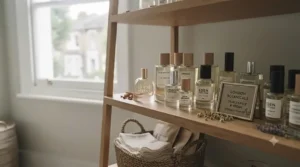
- Look for an independent certification logo, not just a claim. Leaping Bunny, PETA’s Beauty Without Bunnies, or The Vegan Society trademark are audited; a plain “cruelty-free” printed on a box with no logo is unverified.
- Check whether the brand sells in markets requiring animal testing. Some countries have historically required imported cosmetics to be animal-tested; a brand’s “cruelty-free” claim can be technically true for the finished bottle while its parent company’s wider footprint tells a more complicated story.
- Read the ingredient list for animal-derived musk terms. Ambergris, civet, castoreum, and “natural musk” can all signal non-vegan sourcing, even when a brand doesn’t lead with that fact.
- Understand vegan and cruelty-free are different claims. A perfume can be one without being the other — check both if both matter to you specifically.
- Favour brands with a long, public campaigning history over recent converts. Brands like The Body Shop that have publicly fought for stronger animal-testing legislation for decades tend to have more embedded ethical practice than brands that added a vegan logo last year.
- Verify certification currency at the point of purchase. As the Phlur entry above illustrates, certification status can lapse or be renewed — checking the certifying body’s live database takes thirty seconds and removes any doubt.
- Weigh niche transparency over blanket marketing claims. Brands like Zoologist, which clearly flag which specific releases aren’t vegan rather than making a blanket claim, often deserve more trust than brands making an unqualified “100% cruelty-free” statement across an enormous product range.
Vegan Perfume Brands vs Animal-Friendly Fragrance: What’s the Real Difference?
It’s worth unpacking vegan perfume brands versus animal-friendly fragrance as genuinely separate categories, because the marketing language around both terms gets blurred constantly, often deliberately.
A vegan perfume brand, in the strictest sense, formulates every product without any animal-derived ingredient — no beeswax absolute, no genuine ambergris, no civet, no honey, no carmine, no lanolin. Animal-friendly fragrance is a broader, softer term that usually just means no animal testing occurred, which says nothing about whether the finished formula itself contains animal by-products. A brand can therefore be genuinely animal-friendly in the testing sense while still using honey or beeswax in a specific formulation, which is precisely the nuance Zoologist handles more transparently than most competitors by naming its two non-vegan exceptions explicitly rather than burying the detail. For a genuinely plant-based fragrance only approach — meaning zero animal-derived ingredients whatsoever, not just zero animal testing — look specifically for The Vegan Society trademark or an explicit brand statement listing excluded ingredient categories, as The Body Shop White Musk and Floral Street both provide.
Real-World Scenario: Matching Ethical Perfume to How You Actually Shop
Rather than abstract advice, here’s how three realistic UK shopper profiles map onto the seven picks above.
Meera, 24, university student in Manchester, tight monthly budget, new to ethical beauty. Meera wants to build good habits without overspending while she’s still learning which brands to trust long-term. Pacifica or Yardley London both fit her budget, with Pacifica offering a slightly stronger paper trail on formulation transparency for a similar price point.
Fiona, 38, marketing manager in Bristol, has a nickel and fragrance sensitivity, wants a reliable everyday scent. Fiona has learned the hard way that many “natural” fragrances still trigger reactions. Skylar‘s toxicologist-developed, hypoallergenic-focused formulation directly addresses her specific need in a way that scent-first brands don’t prioritise.
Priya, 45, works in sustainability consulting in Edinburgh, wants both audited certification and genuine scent sophistication for client-facing days. Priya isn’t budget-constrained but is unwilling to compromise on verification standards. Floral Street‘s dual Leaping Bunny and PETA certification, paired with genuinely polished niche-adjacent compositions, matches her priorities better than either a budget or an unverified premium option.
Leaping Bunny Certified: What the Logo Actually Means
The Leaping Bunny logo is one of the two most recognised independent cruelty-free certifications globally, and understanding what it actually audits helps explain why it matters more than an unverified “cruelty-free” claim printed without any accompanying logo.
To carry Leaping Bunny certification, a company must pledge to end animal testing at every stage of product development — not just the finished perfume, but ingredients and formulations too — and must recommit to the standard annually while remaining open to third-party audits of that pledge. This is meaningfully different from a brand simply stating “we don’t test on animals” on its own website with no external check; the Leaping Bunny programme, run by the Coalition for Consumer Information on Cosmetics, exists specifically because self-reported claims proved unreliable enough that a genuinely independent verification system was needed. Among the seven perfumes covered in this guide, Floral Street and Phlur both carry (or have carried) this certification, while Pacifica, Yardley London, and Skylar rely on brand self-declaration without the same external audit layer — not necessarily a mark against their honesty, but a genuine difference in verification rigour worth understanding.
Common Mistakes When Buying Cruelty Free Perfume
Even shoppers genuinely committed to ethical fragrance tend to trip over the same handful of assumptions, so it’s worth naming them directly.
The most frequent mistake is treating “vegan” and “cruelty-free” as interchangeable terms, when they measure entirely different things — a perfume needs checking against both standards separately if both genuinely matter to you. A close second is assuming a big designer name is automatically excluded from ethical consideration, or conversely automatically included, without checking; parent-company ownership structures mean some designer-adjacent fragrances have surprising certification status while some seemingly “natural” niche brands don’t hold any certification at all. Buyers also frequently trust a brand’s historic reputation without rechecking current status — certification can lapse, as the Phlur situation illustrates, so a five-year-old blog post confirming a brand’s ethics shouldn’t be treated as current proof. Finally, many shoppers assume UK law fully protects them from animal-tested cosmetics reaching shelves, when the reality — as Cruelty Free International has documented through its ongoing legal challenges — is considerably more complicated than the widely repeated “banned since 1998” summary suggests.
Practical Usage Guide: Building a Genuinely Cruelty-Free Fragrance Wardrobe
Building out a fully ethical fragrance collection works best as a gradual, deliberate process rather than an overnight wardrobe replacement, and most people rush this in ways that waste money.
Start by auditing what you already own — check each existing bottle against the Leaping Bunny and PETA databases online, since you may already own more ethically sourced fragrance than you realise. Next, identify your actual usage pattern before buying anything new: a daily office scent has different requirements (subtlety, hypoallergenic formulation, longevity) than an evening or special-occasion fragrance, which is where a house like Zoologist genuinely shines. When replacing a beloved non-certified scent, use fragrance-matching resources or a specialist retailer to find a genuinely comparable certified alternative rather than guessing blind — several UK niche retailers specifically catalogue vegan and cruelty-free dupes of popular designer scents. Build a small sample collection before committing to full-size bottles of unfamiliar niche houses, since extrait-concentration fragrances in particular can smell dramatically different on skin than they do on a paper blotter or in a shop.
A common first-month mistake is assuming every product from a certified brand’s wider range shares the same certification — as the Zoologist entry shows, even genuinely ethical houses can have specific exceptions within an otherwise certified or largely-vegan collection. Get into the habit of checking product-specific status, not just brand-level status, and this becomes second nature within a few purchases.
Long-Term Value: Is Certified Cruelty-Free Perfume Worth the Premium?
Certified cruelty-free and vegan fragrance does carry a real price premium in several tiers of this market, and it’s worth being honest about where that premium goes rather than assuming certification alone explains the entire cost difference. Certification programmes like Leaping Bunny do charge participating brands fees and require ongoing audit compliance, which factors into overhead — but for niche houses like Floral Street and Zoologist, a larger share of the premium reflects perfumer talent, ingredient quality, and smaller production runs rather than certification costs specifically. Budget picks like Pacifica and Yardley London demonstrate that genuinely animal-friendly formulation doesn’t require premium pricing at all, which is worth remembering before assuming ethics and cost must move together.
Where the calculation genuinely shifts in favour of paying more is longevity and concentration: an eau de parfum or extrait from Floral Street or Zoologist will typically outlast a lighter spray perfume from Pacifica or Skylar by several hours per wear, meaning the effective cost-per-wear gap narrows considerably once you account for how much product each format actually uses. For anyone building a long-term signature scent rather than a rotating everyday spray, the higher upfront cost of a concentrated, certified niche fragrance can work out comparable to repeatedly rebuying cheaper, lighter formats.
Safety, Regulation and the Truth About UK Animal Testing Law
Here’s where genuinely honest analysis matters most in this whole category: the commonly repeated claim that “cosmetics animal testing has been illegal in the UK since 1998” is more complicated than it sounds, and shoppers deserve the accurate version rather than the comfortable one.
The UK did introduce a policy ban on animal testing for cosmetics in 1998, making it the first country to do so, and a sales ban followed in 2013 in alignment with EU legislation at the time. However, Cruelty Free International’s legal challenges revealed that the Home Office quietly abandoned elements of that ban in 2019, only disclosing this after being legally compelled to during judicial review proceedings, and confirmed in 2021 correspondence that some cosmetics ingredients could once again face animal testing requirements under separate chemicals regulations. A 2023 High Court ruling found the government’s actions technically lawful but noted it retained the option to reinstate a full ban, and the government subsequently announced a licensing ban specifically for chemicals used exclusively as cosmetic ingredients — a partial reinstatement, not a full return to the original 1998 position. This context matters directly for anyone buying cruelty-free perfume: UK sale of a fragrance doesn’t automatically guarantee no animal testing occurred anywhere in its supply chain, which is exactly why independent brand-level certification carries more weight now than blanket assumptions about UK law ever should have.

Buyer’s Decision Framework: Which Cruelty Free Perfume Fits Your Priorities
If budget is your primary constraint and you’re new to ethical fragrance shopping, choose Pacifica or Yardley London, because genuinely vegan-leaning formulation at low prices proves ethical sourcing doesn’t require a premium spend. If independently audited certification is non-negotiable for you, choose Floral Street, because its dual Leaping Bunny and PETA status offers the strongest verification of any pick on this list at an accessible mid-range price. If sensitive skin or fragrance allergies are your main concern, choose Skylar, because its toxicologist-led formulation specifically addresses reaction risk alongside its vegan claims. If you want genuinely artistic, conversation-starting scent and are comfortable sampling before committing, choose Zoologist, because its transparent, asterisk-marked labelling of the only two non-vegan releases in an otherwise ethical range reflects a level of honesty rare in this category.
Features That Actually Matter (And Marketing Claims That Don’t)
Fragrance marketing in this category leans heavily on feel-good language, so it’s worth separating genuine ethical substance from packaging padding.
What actually matters: a named, checkable certification body (Leaping Bunny, PETA Beauty Without Bunnies, The Vegan Society) rather than an unbacked claim; explicit disclosure of any animal-derived ingredients rather than a blanket “vegan” statement covering an entire range; and confirmation the brand doesn’t sell in markets historically requiring animal testing for imports. What matters less than the marketing suggests: “natural” as a standalone claim, since natural ingredients can still be animal-derived (honey, beeswax, genuine musk); “clean beauty” branding, which has no legal definition and doesn’t inherently relate to animal welfare at all; and celebrity or influencer association, which speaks to marketing budget rather than formulation ethics. If a bottle leads with “clean” or “natural” but doesn’t name a specific certifying body anywhere in its marketing, that’s worth treating as a prompt to dig further rather than a reason to assume the best.
Problem → Solution: Fixing Common Cruelty-Free Fragrance Frustrations
Problem: my favourite designer perfume isn’t cruelty-free, but I don’t want to give up the scent entirely. Solution: several niche and indie houses formulate close alternatives to popular designer profiles using fully vegan, cruelty-free ingredients — research fragrance-matching communities and specialist retailers before assuming you have to choose between ethics and a familiar scent family.
Problem: I can’t tell if a brand’s “cruelty-free” claim is genuine or just marketing. Solution: check the brand name directly against the Leaping Bunny and PETA databases online — if it’s not listed and the brand doesn’t explain its verification process clearly, treat the claim as unverified rather than false, and decide how much that matters to you.
Problem: a brand I trusted turns out to have a complicated certification history. Solution: this happens more than shoppers expect, as the Phlur entry in this guide illustrates — certifications lapse and get renewed, so build a habit of checking current status at the point of purchase rather than relying on past research.
Problem: I want fully vegan fragrance, but my favourite niche house has some non-vegan releases. Solution: look for brands like Zoologist that explicitly flag which specific products contain animal-derived notes rather than making a blanket claim, and simply avoid those specific releases while enjoying the rest of the range with confidence.
Problem: budget cruelty-free options feel like they don’t last as long as pricier alternatives. Solution: this is often true of lighter spray perfume formats — consider layering technique (fragrance plus a complementary body mist) to extend wear time without upgrading to a pricier concentrated format.
✨ Ready to Build Your Ethical Fragrance Wardrobe?
🌸 Whichever price tier fits your budget, genuinely audited cruelty-free fragrance is more accessible than ever in the UK. Check current prices and availability on the picks above before making your next purchase.
Compassionate Beauty Scent Choices for Specific Buyers
Different priorities and budgets call for different starting points within this category, so it’s worth a direct breakdown by buyer type.
For first-time ethical shoppers on a tight budget: start with Pacifica or The Body Shop White Musk, both offering low financial risk alongside genuinely researched formulation credentials, with the latter carrying independent Vegan Society backing specifically. For sensitive skin or fragrance-allergy sufferers: Skylar‘s toxicologist-developed range directly addresses reaction risk in a way most competitors on this list don’t specifically prioritise. For anyone wanting audited, dual-certified assurance without moving into true niche pricing: Floral Street offers the clearest combined Leaping Bunny and PETA proof at a genuinely mid-range cost. For collectors and fragrance enthusiasts comfortable with an unconventional, sample-first approach: Zoologist‘s artistic, animal-inspired compositions and unusually transparent ingredient disclosure reward the extra research effort the brand explicitly asks of new buyers.

Frequently Asked Questions
❓ What does cruelty-free actually mean on a perfume label?
❓ Is vegan perfume automatically cruelty-free too?
❓ Is animal testing for cosmetics actually illegal in the UK?
❓ How can I check if a specific perfume brand is genuinely certified?
❓ Do cruelty-free perfumes cost more than regular fragrances?
Conclusion
Genuine cruelty free perfume for women isn’t defined by a feel-good word on a box — it’s defined by whether an independent body has actually checked the claim, and by how transparent a brand is willing to be about the parts of its range that don’t quite meet the highest standard. Across the seven fragrances in this guide, The Body Shop White Musk and Floral Street offer the clearest audited proof at accessible and mid-range prices, Pacifica and Yardley London show that ethical sourcing doesn’t require a big budget, and Zoologist‘s honest, asterisk-marked exceptions demonstrate what real transparency looks like in a category too often built on vague marketing language.
What ties every recommendation here together is the same principle Cruelty Free International keeps returning to in its ongoing legal fight: UK law alone doesn’t guarantee an animal-free supply chain the way most shoppers assume, which makes individual brand research — checking specific certifications, reading ingredient lists, and rechecking status periodically — a genuinely worthwhile five minutes before any fragrance purchase, not just a nice-to-have for the especially committed.
✨ Found Your Next Signature Scent?
🔍 Check current prices on your top pick above, and take the extra moment to verify certification status directly with Leaping Bunny or PETA — your fragrance wardrobe, and the animals behind it, will both be better for it.
Recommended for You
- Perfume For Sensitive Skin Women: 7 Gentle Picks 2026
- Natural Perfume for Women: 7 Clean Scents Worth Your Money 2026
- 7 Best Date Night Perfume Women That Actually Work (2026)
Disclaimer: This article contains affiliate links. As an Amazon Associate, I earn from qualifying purchases. If you purchase products through these links, we may earn a small commission at no additional cost to you.
✨ Found this helpful? Share it with your friends! 💬🤗
