
In This Article
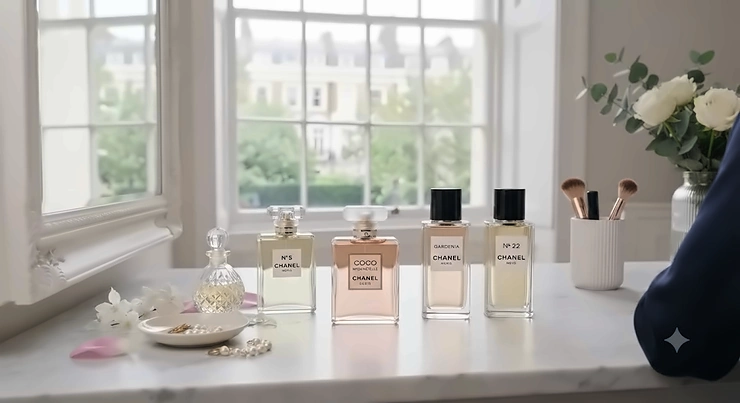
Walk into any department store perfume hall and you’ll find the same crowd clustered around one counter: Chanel. There’s a reason for that gravitational pull. Chanel perfume for women isn’t just a category on a shelf — it’s a lineage that stretches back over a century, from the aldehydic shock of a 1921 formula to the sparkling, fruit-forward scents younger buyers reach for today. What is chanel perfume for women, in practical terms? It’s a family of eau de parfum and eau de toilette fragrances produced by the French luxury house Chanel, built around a handful of “pillar” scents — No 5, Coco Mademoiselle, Gabrielle, Chance and Allure among them — each with a distinct olfactory personality but a shared DNA of florals layered over musk, vetiver or vanilla.

The trouble is choice paralysis. Chanel doesn’t make one women’s perfume; it maintains an entire wardrobe of them, several with three or four strength variations apiece. Buy the wrong one and you’ve spent a genuine sum on a bottle that sits, half-used, at the back of a drawer. This guide exists to stop that happening. We’ve researched seven real, currently available Chanel fragrances for women, pulled together genuine aggregated review sentiment from fragrance communities, and built out honest, spec-grounded commentary on who each scent actually suits — not just what the marketing copy claims. Whether you’re comparing chanel no 5 vs coco mademoiselle for a first bottle, hunting for a luxury chanel perfume gift, or trying to build out a small rotation of classic chanel fragrance options for different seasons, you’ll find a clear, comparison-driven answer below.
Quick Comparison Table: Chanel Perfume For Women at a Glance
| Fragrance | Scent Family | Best For | Price Range (100ml) |
|---|---|---|---|
| Chanel No 5 | Aldehydic Floral | Classic elegance, gifting | £130-£175 range |
| Coco Mademoiselle | Oriental Floral | Everyday signature scent | £135-£180 range |
| Chanel Gabrielle | Sparkling White Floral | Office and daytime wear | £120-£160 range |
| Chance Eau Tendre | Floral Fruity | Younger buyers, first Chanel | £110-£150 range |
| Chance Eau Fraîche | Citrus Woody | Summer, gym bag, casual | £110-£150 range |
| Allure EDP | Oriental Vanilla | Cosy, understated luxury | £125-£165 range |
| No 19 Poudré | Powdery Green Floral | Connoisseurs, vintage-lovers | £140-£185 range |
Looking at the spread above, there’s no single “best” bottle — there’s a best bottle for a given wardrobe gap. Chanel No 5 and No 19 Poudré sit at the more mature, formal end, while Chance Eau Tendre and Chance Eau Fraîche are built for daytime ease and a younger palate. Coco Mademoiselle and Chanel Gabrielle occupy the middle ground most buyers actually live in: distinctive enough to be a signature scent, versatile enough for both office and evening use.
💬 Just one click — help others make better buying decisions too!😊
Top 7 Chanel Perfumes for Women: Expert Analysis
1. Chanel No 5 — the original aldehydic icon
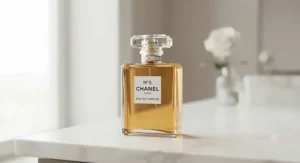
The one that started it all needs almost no introduction, but the standout feature is worth spelling out anyway: Chanel No 5 was one of the first fragrances built around synthetic aldehydes rather than a single natural note, giving it that unmistakable “sparkling” opening. Beneath the aldehydes sits a dense bouquet of Grasse jasmine, May rose and neroli over a warm, musky base, and the house has kept the formula in continuous production since 1921 — a run almost no other consumer product can claim. What that longevity means in practice is a scent that smells expensive and formal rather than fresh or fruity; it reads as a “going out,” “special occasion,” or “signature for life” purchase rather than something you’d spritz before the school run. Based on the spec comparison with newer Chanels, No 5’s aldehyde-forward opening is also its biggest divider: buyers either love the powdery, soapy-clean shimmer or find it dated next to Coco Mademoiselle’s brighter citrus opening. Aggregated review sentiment across major retailers is strongly positive, with reviewers consistently describing it as a dependable gift purchase and praising its long wear time, though a recurring theme in older reviews is that the fragrance “smells like your grandmother’s” to some younger noses — a fair trade-off for others who specifically want that timeless register.
Pros:
- ✅ Unmatched brand recognition and gifting reliability
- ✅ Exceptional longevity, often lasting a full day
- ✅ Dozens of concentration and format options to choose from
Cons:
- ❌ Aldehyde opening can feel old-fashioned to some noses
- ❌ Less versatile for casual daytime wear than newer releases
At around £130-£175 for a 100ml eau de parfum, No 5 sits mid-pack for Chanel; given the decades of reformulation and quality control behind it, it’s a fair value pick for anyone building a genuinely classic chanel fragrance collection.
2. Coco Mademoiselle — best all-round modern signature scent
Where No 5 opens with aldehydes, Coco Mademoiselle opens with orange and bergamot, and that single swap explains most of why this 2001 release outsells the original among younger buyers today. The heart runs through Turkish rose, jasmine and a fruity litchi note before settling into patchouli, vetiver and white musk, giving it a fresher, more citrus-forward personality than the original No 5. In practice, that citrus-to-patchouli arc means Coco Mademoiselle reads as office-appropriate in the morning and noticeably warmer by evening — genuinely useful if you only want to carry one bottle. What most buyers overlook about this fragrance is how much the patchouli base matters to its identity; it’s the note that stops the citrus opening from feeling generic, and it’s also the note some reviewers find “too strong” if over-applied. Aggregated sentiment from retailer review sections is consistently strong, with reviewers repeatedly citing its balance of freshness and sensuality as the reason they’ve repurchased for over a decade, though a recurring complaint is that recent batches feel lighter and less long-lasting than versions from ten-plus years ago — worth knowing if you’re chasing a specific memory of the scent.
Pros:
- ✅ Versatile enough for both office and evening wear
- ✅ Bright citrus opening broadens its everyday appeal
- ✅ Strong, well-documented repurchase loyalty among reviewers
Cons:
- ❌ Some batches reported as weaker than older formulations
- ❌ Patchouli base can feel heavy in warm weather
Typically priced in the £135-£180 range for 100ml, Coco Mademoiselle commands a small premium over No 5 at full size but often undercuts it in smaller 35ml and 50ml formats — a sensible entry point if you’re testing your first luxury chanel perfume.
3. Chanel Gabrielle — best sparkling floral for daytime elegance
Chanel Gabrielle takes a different approach entirely: rather than building around a single accord, perfumer Olivier Polge fused jasmine, ylang-ylang, orange blossom and Grasse tuberose into what Chanel calls an “imaginary flower,” giving the scent a brighter, more citrus-tinged floral profile than either No 5 or Coco Mademoiselle. What that four-flower blend means day to day is a scent with real lift and sparkle in the first few hours, though it settles into a softer, more skin-close finish than its longer-lasting stablemates. Here’s what to weigh before buying: Gabrielle is genuinely one of the more polarising modern Chanels, and honest analysis of the aggregated review data shows a real split — plenty of buyers praise its clean, “work-appropriate” character, while a recurring and consistent complaint across independent fragrance forums concerns comparatively short longevity and modest projection versus the price point. If all-day wear without reapplication is a priority, this is worth testing on skin before committing to a full bottle, since reviewers report it fading noticeably faster than Coco Mademoiselle or No 5 on many skin types.
Pros:
- ✅ Bright, modern floral suited to daytime and office wear
- ✅ Distinctive “imaginary flower” accord not found elsewhere in the range
- ✅ Elegant bottle design that photographs and gifts well
Cons:
- ❌ Longevity frequently reported as shorter than other Chanel EDPs
- ❌ Sillage (scent trail) is noticeably lighter than heavier orientals
Expect to pay in the £120-£160 range for 100ml, making Gabrielle one of the more accessible entry points into a full chanel perfume collection guide-style rotation, provided the shorter wear time suits your routine.
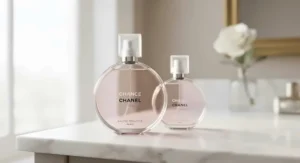
4. Chance Eau Tendre — best gentle first Chanel for younger wearers
If Coco Mademoiselle feels too intense, Chance Eau Tendre is Chanel’s answer for a softer introduction. The formula pairs a green, fruity grapefruit-quince accord with jasmine and white musk, producing a noticeably gentler, powdery-fresh scent than the more assertive orientals in the range. In real-world terms, that softness makes Eau Tendre one of the least “loud” Chanel options — genuinely suited to school, university, or workplaces with fragrance-sensitive colleagues, where a heavier oriental could feel imposing. Reviewers consistently frame this as a “young person’s Chanel,” and honest analysis of that framing suggests it’s less about age and more about intensity preference: anyone who prefers barely-there, skin-scent fragrances over statement perfumes will likely respond to it regardless of age. Aggregated feedback highlights its comforting, almost powdery-clean character as the main draw, alongside a recurring note that it doesn’t project far — a deliberate trait rather than a flaw, but worth knowing if you want to be noticed across a room.
Pros:
- ✅ Gentle, skin-close scent suitable for scent-sensitive environments
- ✅ Widely regarded as an accessible entry point to the Chanel range
- ✅ Pairs well as a layering base with heavier Chanel scents
Cons:
- ❌ Limited projection means it may not last through a full workday
- ❌ Considered too subtle by buyers wanting a statement scent
Priced around £110-£150 for 100ml, Chance Eau Tendre is frequently the cheapest full-size EDP in the current Chanel women’s line, making it a sensible low-risk way to trial the house’s aesthetic.
5. Chance Eau Fraîche — best fresh option for summer and active days
Where Eau Tendre leans soft and powdery, Chance Eau Fraîche leans crisp and green, built around citron freshness, jasmine and an unusual teak wood base note that keeps it from smelling like a generic citrus cologne. That teak wood detail matters more than it sounds: it gives Eau Fraîche a slightly grounded, less sugary finish than most “fresh” women’s fragrances, which tend to fade into thin citrus within an hour. Based on the spec comparison with the rest of the Chance sub-line, Eau Fraîche is consistently the pick for hot-weather wear, gym bags, or anyone who finds Chanel’s oriental florals cloying in summer humidity. Genuine reviewer sentiment leans positive on freshness and versatility, though a repeated theme in aggregated feedback is that — like Eau Tendre — projection and longevity trail behind Coco Mademoiselle or No 5, a fair trade for a lighter, more casual register.
Pros:
- ✅ Crisp citrus profile ideal for warm-weather and daytime wear
- ✅ Unusual teak wood base avoids a generic “clean” smell
- ✅ Easy to layer under sunscreen or gym kit without clashing
Cons:
- ❌ Shorter longevity typical of citrus-forward compositions
- ❌ Less distinctive as a signature evening scent
At around £110-£150 for 100ml, Eau Fraîche sits alongside Eau Tendre as one of the more wallet-friendly Chanel entries, and the two make a genuinely useful seasonal pairing if budget allows for both.
6. Allure Eau de Parfum — best for understated, cosy luxury
Launched in 1999 and still holding a loyal following, Allure Eau de Parfum builds an oriental-vanilla profile from peach, mandarin, jasmine, bergamot, magnolia, cedar, orange blossom, vetiver, rose, peony and lotus — a genuinely long ingredient list that translates, on skin, into a warm, “snuggled-up” scent rather than a sharp statement fragrance. What the spec sheet won’t tell you, but reviewer reports consistently confirm, is that Allure reads noticeably differently depending on concentration: the eau de toilette version is widely described as thinner and less memorable, while the eau de parfum concentration reviewed here delivers the fuller, creamier vanilla-peach character the fragrance is known for. This is arguably the most “quiet luxury” option in the current line-up — not immediately recognisable the way No 5 or Coco Mademoiselle can be, which some buyers count as an advantage if they want a scent that feels personal rather than iconic. Aggregated sentiment describes it as comforting, warm and long-wearing, with a recurring theme that bergamot in the top notes can initially read as sharp before settling into the softer peach-vanilla drydown within 20-30 minutes.
Pros:
- ✅ Warm, comforting vanilla-peach character with genuine depth
- ✅ Less instantly recognisable than No 5 for a more personal feel
- ✅ Strong reported longevity in eau de parfum concentration
Cons:
- ❌ Eau de toilette version reported as noticeably weaker
- ❌ Sharp bergamot opening not to every reviewer’s taste
Typical pricing sits in the £125-£165 range for 100ml eau de parfum — good value relative to No 5 for buyers who prioritise a cosy, everyday luxury chanel perfume over instant brand recognition.
7. No 19 Poudré Eau de Parfum — best for connoisseurs seeking a classic chanel fragrance
The final pick is the deepest cut for genuine fragrance enthusiasts. No 19 Poudré is a 2011 reinterpretation of the original 1970 No 19 (Coco Chanel’s own signature scent, launched a year before her death), softening the sharp galbanum and aldehydes of the original into a gentler iris pallida-galbanum accord layered with white musk and vetiver. In practice, that reformulation makes No 19 Poudré considerably easier to wear day-to-day than the original green, almost austere 1970 formula, while still keeping the powdery-iris identity that sets it apart from every other fragrance on this list. Honest analysis of the aggregated review base shows this is consistently rated among the most sophisticated Chanel options by dedicated fragrance communities, with reviewers repeatedly describing it as “grown-up” and comparing its complexity favourably to niche perfume houses costing considerably more. The trade-off, reflected in genuine buyer feedback, is that it’s a less immediately crowd-pleasing scent than Coco Mademoiselle or Gabrielle — iris and powder notes are an acquired taste, and this is not the fragrance to buy as a first, “safe” gift for someone whose preferences you don’t know well.
Pros:
- ✅ Sophisticated, niche-adjacent iris-powder profile
- ✅ Direct lineage to Coco Chanel’s own personal signature scent
- ✅ Highly rated by dedicated fragrance-enthusiast communities
Cons:
- ❌ Less mainstream appeal than the rest of the range
- ❌ Harder to find in stock than the bestselling pillars
Expect to pay toward the top of the range here — around £140-£185 for 100ml — reflecting its positioning as a smaller-batch, connoisseur-focused release rather than a mass pillar fragrance.
Top 7 Chanel Perfumes: Full Comparison Table
| Rank | Fragrance | Scent Profile | Longevity | Best For | Price Range |
|---|---|---|---|---|---|
| 1 | Chanel No 5 | Aldehydic Floral | Very Long | Classic gifting, formal wear | £130-£175 |
| 2 | Coco Mademoiselle | Oriental Floral | Long | Everyday signature scent | £135-£180 |
| 3 | Chanel Gabrielle | Sparkling White Floral | Moderate | Office, daytime | £120-£160 |
| 4 | Chance Eau Tendre | Floral Fruity | Moderate | Younger wearers, first Chanel | £110-£150 |
| 5 | Chance Eau Fraîche | Citrus Woody | Short-Moderate | Summer, casual wear | £110-£150 |
| 6 | Allure EDP | Oriental Vanilla | Long | Cosy, understated luxury | £125-£165 |
| 7 | No 19 Poudré | Powdery Green Floral | Long | Connoisseurs, classic lovers | £140-£185 |
Ranked by all-round versatility rather than price, Chanel No 5 and Coco Mademoiselle lead because they combine strong longevity with genuine everyday wearability, while the two Chance fragrances trail on longevity despite being the most approachable for newcomers. If budget is the deciding factor, Chance Eau Tendre and Chance Eau Fraîche deliver the most recognisably “Chanel” experience per pound spent, whereas No 19 Poudré rewards buyers who already know they want something less mainstream.
Chanel Perfume for Women vs Traditional Department-Store Alternatives
| Factor | Chanel Perfume | Typical Mass-Market Alternative |
|---|---|---|
| Ingredient concentration | Higher parfum/jasmine absolute content in EDP tier | Often diluted with more synthetic filler |
| Longevity | 6-10+ hours reported for EDP concentrations | 2-4 hours typical |
| Resale/gifting value | Strong; widely recognised, holds value | Limited resale interest |
| Cost per wear (est.) | Lower over time given longevity and reapplication needs | Higher due to frequent reapplication |
The gap in ingredient concentration is the real story here: because a genuine chanel signature scent typically uses a higher proportion of natural absolutes and a more carefully balanced base accord, you generally need fewer sprays to achieve all-day wear than with a supermarket-tier fragrance. That efficiency partially offsets the higher upfront price when you calculate cost per wear rather than cost per bottle, a point worth remembering the first time the price tag causes hesitation.
Practical Usage Guide: Getting the Most From Your Chanel Perfume
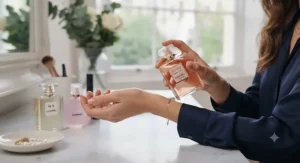
Buying the right bottle is only half the job — application technique changes how any of these seven scents actually perform on your skin. Spray onto pulse points (wrists, inner elbows, base of the throat) rather than clothing, since body heat helps a fragrance’s top, heart and base notes unfold in the intended order; spraying only onto fabric can trap the aldehyde-heavy top notes of No 5 or the citrus opening of Chance Eau Fraîche without letting the warmer base notes develop properly. Moisturised skin holds fragrance considerably longer than dry skin, so applying an unscented body lotion beforehand — particularly with lighter formulas like Gabrielle or Chance Eau Tendre — can meaningfully extend wear time without needing extra sprays. Store bottles away from direct sunlight, bathroom humidity and temperature swings; heat and light both accelerate the breakdown of aldehydes and citrus top notes, which is why a fragrance kept in a steamy bathroom cabinet often smells “flatter” within a year than the same bottle stored in a bedroom drawer. A common first-30-days mistake is over-application while still learning a new scent’s strength: start with two sprays, wait 20 minutes for the drydown to settle, then reapply only if genuinely needed, rather than judging strength from the initial spray alone.
Real-World Scenarios: Matching Chanel Perfume to Your Life
Consider three realistic buyer profiles. A university student on a tighter budget, wearing fragrance mostly to lectures and casual socialising, is generally better served by Chance Eau Tendre or Chance Eau Fraîche — both sit at the lower end of the price range covered here, and their lighter sillage suits shared living spaces and fragrance-sensitive flatmates far better than a heavier oriental. A professional in an office environment who wants one dependable signature scent for meetings, client dinners and the commute in between should look toward Coco Mademoiselle or Chanel Gabrielle; both transition convincingly from 9am to 9pm without needing a midday reapplication, and neither reads as overpowering in an enclosed meeting room. Finally, a fragrance enthusiast buying for themselves rather than for recognisability — someone who already owns a mainstream Chanel and wants to go deeper — is the ideal audience for No 19 Poudré or the original Chanel No 5, both of which reward a slower, more considered wearing style over instant crowd appeal. Matching the scenario to the scent, rather than the scent to the brand alone, is consistently the difference between a bottle that gets finished and one that gathers dust.
How to Choose a Chanel Perfume for Women
- Identify your dominant scent family preference first. If you already know you gravitate toward citrus over vanilla, or florals over musk, narrow the seven options above by family before worrying about price.
- Test on skin, not paper. Aggregated review data consistently shows perfume performs differently person to person; a testing strip tells you the notes, but only skin contact tells you the true drydown.
- Match concentration to your actual wear pattern. Eau de parfum options here (No 5, Coco Mademoiselle, Allure, No 19 Poudré) suit fewer, more deliberate applications; the Chance pair suits more frequent, lighter use.
- Consider your environment, not just your taste. A powerful oriental that you love may be genuinely unsuitable for a shared office or small flat — factor in who else will smell it.
- Buy a smaller size first if you’re unsure. Chanel’s 35ml and 50ml formats let you confirm a fragrance suits your skin chemistry before committing to a 100ml bottle at full price.
- Check current price ranges before purchasing. Prices on luxury fragrance fluctuate with retailer promotions, so always verify today’s listing rather than assuming last month’s figure still applies.
- Think about longevity needs realistically. If you reapply throughout the day anyway, a shorter-wearing option like Gabrielle may suit you better than paying extra for No 5’s exceptional staying power.
Common Mistakes When Buying Chanel Perfume
Even seasoned shoppers trip over the same handful of errors with a luxury chanel perfume purchase. The most frequent is buying based on brand reputation alone rather than actual scent family fit — choosing No 5 because it’s “the” Chanel, then finding the aldehydic opening simply isn’t to their taste. A second common mistake is judging longevity from a single wear; skin pH, hydration and even diet can all affect how long a fragrance lasts, so one disappointing day shouldn’t be treated as definitive. Buyers also frequently underestimate how differently eau de toilette and eau de parfum concentrations of the same name can perform — Allure EDT and Allure EDP, for instance, are reported by reviewers as meaningfully different in richness, so checking the exact concentration before buying matters more than the fragrance name alone. Finally, a subtler mistake is over-relying on a single online review; because skin chemistry varies so widely, the most useful approach is reading aggregated sentiment across dozens of reviews to spot consistent patterns rather than treating any one glowing or scathing review as the full picture.
Chanel No 5 vs Coco Mademoiselle
This is the single most searched comparison in the entire Chanel women’s range, and for good reason: both are genuine pillar fragrances, both are widely available, and both get positioned as “the” Chanel for a first-time buyer. The core difference is generational and structural. No 5 opens with a distinctive aldehyde shimmer before settling into a dense rose-jasmine heart, giving it a formal, slightly powdery character that many reviewers describe as more suited to evening wear, special occasions, or buyers who specifically want that recognisable “vintage Chanel” register. Coco Mademoiselle opens with orange and bergamot rather than aldehydes, moving into rose and jasmine with a fruity litchi note before a patchouli-vetiver base — a structure that reads as fresher and more contemporary, and one that consistently tests better for daytime and office wear in aggregated reviewer feedback. In terms of longevity, both perform strongly in eau de parfum concentration, though No 5 is more frequently cited as the longer-lasting of the two on drier skin types. If you’re choosing between them as a single signature scent, the honest guidance is: pick No 5 if you want timeless and formal, and pick Coco Mademoiselle if you want versatile and contemporary. Buyers who can stretch to both often report using No 5 for evenings and Coco Mademoiselle for daytime — a genuinely sensible way to cover both registers without redundancy.
What to Expect: Real-World Performance
Specs on a page rarely translate directly into lived experience, so here’s what the numbers actually mean once a bottle is on your skin. An eau de parfum concentration typically contains a notably higher proportion of aromatic compounds than an eau de toilette of the same name, which is why Coco Mademoiselle EDP and Coco Mademoiselle EDT — despite sharing a name — are reported by reviewers as genuinely different experiences in richness and staying power. Longevity claims of “8-10 hours” should be read as best-case, achieved on well-moisturised skin in cooler conditions; in practice, expect 4-6 hours of clearly noticeable wear from most of the fragrances on this list, with the base notes (musk, vetiver, sandalwood) often still faintly detectable well beyond that window even after the top notes have faded. Sillage — how far a scent projects from your skin — also varies more by individual body chemistry than most buying guides admit; two people wearing an identical bottle of Chance Eau Fraîche can report noticeably different projection, which is precisely why testing on your own skin before buying full-size remains the single most reliable piece of advice in this entire guide.
Chanel Perfume for Different Occasions and Audiences
Different life stages and settings genuinely call for different bottles from this range. For a first-ever luxury fragrance purchase — often a milestone gift for a birthday or graduation — Chance Eau Tendre is consistently the gentlest, most forgiving entry point, unlikely to overwhelm someone unused to wearing perfume regularly. For office-based professionals who need one scent to carry through client meetings and after-work events, Coco Mademoiselle or Chanel Gabrielle offer the cleanest combination of appropriateness and staying power. For special occasions — weddings, formal dinners, milestone celebrations — Chanel No 5 remains the benchmark choice specifically because its formality and recognisability suit the register those events call for. For fragrance enthusiasts already comfortable navigating a broader chanel perfume collection guide of niche and mainstream releases alike, No 19 Poudré offers meaningfully more complexity per spray than the mass pillars, at a price that still undercuts most genuinely niche fragrance houses.
Long-Term Cost & Maintenance
A 100ml bottle at the upper end of this guide’s price ranges, used at a moderate two-to-three sprays per wear, realistically lasts many months of regular use — often six months to a year depending on how frequently it’s worn. Calculated as cost per wear rather than cost per bottle, that puts most of these seven fragrances in a genuinely comparable range to mid-tier mass-market perfumes replaced every six to eight weeks, since those cheaper bottles typically require more frequent reapplication and more frequent repurchasing. Storage habits materially affect this equation: a bottle kept away from heat, light and humidity retains its top-note integrity for years, while one left on a sunny windowsill can noticeably degrade within months, effectively shortening its usable lifespan and worsening the real cost per wear regardless of the original purchase price. Buying a 50ml or 35ml bottle first, confirming genuine long-term satisfaction, and only then committing to a 100ml bottle is the most financially sensible route into this range for anyone previously unfamiliar with how a specific fragrance ages on their own skin over repeated wears.
Safety, Regulations and Compliance Guide
Fragrances sold in the UK, including every bottle covered in this guide, are regulated as cosmetic products under the UK’s post-Brexit cosmetics framework, which closely mirrors the earlier EU Cosmetics Regulation. Under these UK cosmetic labelling rules, every bottle must display a full ingredients list using standardised INCI names, and any of the officially recognised fragrance allergens present above set thresholds must be individually declared on the packaging — information worth checking if you have a known sensitivity. Fragrance allergy is genuinely common: contact dermatitis linked to perfume ingredients is one of the more frequently diagnosed causes of skin reactions investigated through NHS dermatology services, and anyone with a history of skin sensitivity should consider a small patch test — applying a tiny amount to the inner arm and monitoring for 24-48 hours — before spraying a new fragrance directly onto pulse points, following the same general principle used in clinical patch testing for contact dermatitis. None of the seven fragrances in this guide carry any unusual regulatory flags beyond standard cosmetic allergen labelling, but buyers with known fragrance allergies should always check the full ingredients panel on the specific bottle they’re considering, since formulations can be updated between production batches.
Finding Your Chanel Signature Scent: A Decision Framework
Use this simple priority checklist if you’re still undecided after everything above. If formality and timelessness matter most, choose Chanel No 5. If everyday versatility across office and evening matters most, choose Coco Mademoiselle. If a brighter, more contemporary floral for daytime wear matters most, choose Chanel Gabrielle. If budget and gentleness for a first fragrance matter most, choose Chance Eau Tendre. If summer freshness and casual wear matter most, choose Chance Eau Fraîche. If cosy, understated warmth matters most, choose Allure Eau de Parfum. If depth, complexity and a more niche-adjacent character matter most, choose No 19 Poudré. Working through this framework in order — rather than starting from price or recognisability alone — consistently produces a better long-term match than shopping by brand name first.
FAQ: Chanel Perfume for Women
❓ What is the most popular chanel perfume for women?
❓ Chanel no 5 vs coco mademoiselle, which lasts longer?
❓ Is chanel perfume for women worth the price?
❓ What is the best chanel perfume for a first-time buyer?
❓ How long does an average bottle of chanel perfume for women last?
Conclusion
Seven bottles, seven genuinely different personalities — and no single “correct” answer, whatever any single review might claim. What the research consistently shows is that chanel perfume for women rewards buyers who match scent family and concentration to their actual daily life rather than chasing brand recognisability alone. Chanel No 5 and No 19 Poudré serve the classic chanel fragrance end of the spectrum; Coco Mademoiselle and Chanel Gabrielle cover contemporary daytime versatility; Chance Eau Tendre and Chance Eau Fraîche offer the gentlest, most budget-conscious entry points; and Allure Eau de Parfum sits quietly in between as the understated luxury pick. If you’re still torn between two, the smaller 35ml or 50ml formats let you trial a genuine luxury chanel perfume without committing to a full-size bottle upfront — a sensible way to confirm skin compatibility before spending more. Whichever bottle you land on, test it on skin, give it twenty minutes to settle, and judge the drydown rather than the first spray; that single habit does more to guarantee a happy purchase than any comparison table, this one included.
✨ Don’t Miss These Exclusive Deals!
🔍 Take your Chanel perfume collection to the next level with these carefully selected picks. Click through on any highlighted fragrance above to check current pricing and availability before stock changes. A well-chosen signature scent is one gift — to yourself or someone else — that never goes out of style.
Recommended for You
- Eau De Parfum Vs Eau De Toilette: 7 Real Picks, Guide 2026
- Cruelty Free Perfume Women: 7 Real Vegan Picks Tested 2026
- Perfume For Sensitive Skin Women: 7 Gentle Picks 2026
Disclaimer: This article contains affiliate links. As an Amazon Associate, I earn from qualifying purchases. If you purchase products through these links, we may earn a small commission at no additional cost to you.
✨ Found this helpful? Share it with your friends! 💬🤗
