
In This Article
There’s a specific kind of regret that arrives around 2pm on a hot day, somewhere between the second bus stop and the office lift, when the rich, cosy fragrance that smelled perfect in the shop mirror has curdled into something closer to a headache. Heat doesn’t lie about a perfume’s true character, it amplifies it, and a scent built for cold evenings rarely survives the translation to a 24-degree pavement. A light summer fragrance solves this by working with the heat rather than fighting it.
This guide exists because most “best summer perfume” content online reads like a rewritten product description, all adjectives and no actual reasoning. We’ve taken a different approach. Every fragrance below is a real, currently available bottle from amazon.co.uk, with honest commentary on how it actually behaves once your skin warms up. A light summer fragrance, in plain terms, is built around volatile, low-molecular-weight ingredients, typically citrus, aquatic or green notes, that vaporise readily even at room temperature; this is the same underlying chemistry, known as volatility, that perfumers have long relied on to make the top of a fragrance feel immediately fresh rather than heavy.
Whether you’re after a fresh summer perfume for the daily commute, curious how citrus and aquatic scents for heat actually differ from their winter-weight cousins, wanting to finally understand what top notes mean before you buy blind, or just need holiday-friendly bottles that won’t get confiscated at security, this article walks through seven genuinely good options, what separates them, and the mistakes that turn a promising summer scent into a scrubbed-off disappointment.
Quick Comparison Table
| Fragrance | Concentration | Notes Family | Price Range | Best For |
|---|---|---|---|---|
| Adidas Ice Dive | EDT | Citrus aromatic | around £7-£12 | Cheapest genuine entry point |
| The Body Shop Moringa | EDT | Light floral | around £10-£15 | Holiday-friendly travel bottle |
| Davidoff Cool Water | EDT | Aquatic aromatic | around £25-£37 | Best all-round summer classic |
| Giorgio Armani Acqua di Gio | EDT | Aquatic citrus | around £55-£65 | Best citrus-aquatic blend |
| Dolce & Gabbana Light Blue | EDT | Citrus floral fruity | around £50-£62 | Best Mediterranean-inspired scent |
| Marc Jacobs Daisy | EDT | Light floral fruity | around £50-£58 | Best youthful daytime pick |
| Jo Malone Lime Basil & Mandarin | Cologne | Citrus aromatic | around £50-£60 | Premium holiday-friendly cologne |
Looking at the table, the split falls broadly into three price bands with distinct personalities. The Adidas Ice Dive and The Body Shop Moringa sit at the accessible end, ideal for testing whether light, citrus-led fragrances suit you before committing further. The Davidoff Cool Water occupies genuinely useful middle ground, an aquatic classic that’s stayed relevant for decades precisely because it performs well in heat. The remaining four, Acqua di Gio, Light Blue, Daisy and Lime Basil & Mandarin, sit at the premium end, where the extra spend buys more complex, longer-blooming compositions rather than simply a bigger name on the box.
💬 Just one click — help others make better buying decisions too! 😊
Top 7 Light Summer Fragrances: Expert Analysis
1. Adidas Ice Dive — cheapest genuine entry point
The standout feature here is simply how much genuinely wearable citrus-aromatic fragrance you get for under a tenner. This isn’t a watered-down imitation of something pricier, it’s a purpose-built aromatic citrus EDT with a fairly complete note structure for its price bracket.
On paper, the top notes of grapefruit, mandarin and bergamot open exactly as a light summer fragrance should, sharp and immediately refreshing, before settling into lavender, sandalwood and patchouli through the middle and base. Based on the spec comparison against fragrances costing five or six times as much, the note complexity here is genuinely more ambitious than the price suggests, even if the ingredients themselves are less refined than in a premium composition. What most buyers overlook about budget aromatic fragrances like this one is that lower projection isn’t necessarily a flaw in summer specifically, since heat already amplifies scent throw, so a naturally lighter formulation can actually behave more considerately in warm, enclosed spaces like offices or public transport.
Aggregated reviewer sentiment consistently describes this as a genuinely pleasant, fresh daytime scent, with buyers specifically noting they’ve repurchased it multiple times and consider it excellent value at the price, alongside comments that it performs better on skin than the price point would suggest.
Pros:
- ✅ Genuinely complete citrus-aromatic note structure for the price
- ✅ Naturally lighter projection suits warm, enclosed spaces
- ✅ Widely repurchased according to aggregated reviews
Cons:
- ❌ Shorter longevity than premium EDTs, typically 2-4 hours
- ❌ Ingredients are less refined than pricier equivalents
Typically priced around £7-£12 for 100ml, making this the obvious starting point if you’re not yet sure whether light, citrus-led fragrances suit you.

2. The Body Shop Moringa — best holiday-friendly travel bottle
This fragrance’s standout feature isn’t really the scent itself, pleasant and delicately floral as it is, it’s the format. The 30ml bottle is explicitly designed to be pocket-sized, and reviewers consistently confirm it genuinely behaves that way in practice, small enough to disappear into a handbag or wash bag without adding noticeable bulk.
Here’s what the product listing won’t spell out clearly: a 30ml bottle sits comfortably within the 100ml liquid allowance UK airports still generally apply to hand luggage, making it a genuinely sensible holiday-friendly bottle rather than something you’d need to decant or leave at home. Based on the spec comparison against other travel-sized fragrances, the floral profile here leans gentler and less citrus-forward than most of the other picks on this list, which suits buyers who want something light without going fully aromatic or aquatic.
Aggregated reviewer sentiment specifically praises the format for travel, with multiple buyers describing it as an easy pop-into-a-purse size and noting it layers nicely over other citrus scents later in the day, a small but genuinely useful versatility for warm-weather wear.
Pros:
- ✅ Genuinely pocket-sized, ideal for hand luggage
- ✅ Gentle floral profile suits those wanting less citrus intensity
- ✅ Reviewers confirm it layers well with other light scents
Cons:
- ❌ Floral profile is less universally crowd-pleasing than citrus
- ❌ Smaller bottle means more frequent repurchasing
Typically priced around £10-£15 for 30ml. Worth checking current price, as Body Shop pricing shifts with regular promotions.
3. Davidoff Cool Water — best all-round summer classic
Cool Water has remained a genuine summer staple since the late 1980s for a reason that becomes obvious the moment it’s worn in actual heat: the aquatic, marine-inspired composition was built specifically around the idea of freshness, and decades of continuous popularity suggest that formula still works.
The listed top notes of seawater, lavender, mint and coriander deliver exactly the kind of sharp, immediate freshness a light summer fragrance needs, while the sage and amber base keeps the composition from disappearing entirely within the first hour, a common weakness of purely citrus-led scents. What most buyers overlook about aquatic classics like this one is that the “marine” note family isn’t a real, harvestable ingredient, it’s a synthetic accord designed specifically to evoke sea air, and Cool Water remains one of the compositions most credited with popularising that entire genre. Based on the spec comparison, this puts it in a genuinely different lane from the purely citrus fragrances on this list, aquatic notes tend to hold their character in humidity better than citrus alone, which fades fastest of all the volatile families.
Aggregated reviewer sentiment is consistently strong, with buyers repeatedly describing the scent as fresh without being overpowering and specifically praising the value at this price point, alongside comments that it’s remained a long-term favourite through multiple repurchases.
Pros:
- ✅ Aquatic-marine profile holds up well in humid heat
- ✅ Genuinely long track record of consistent quality
- ✅ Strong, consistently positive aggregated reviews
Cons:
- ❌ The classic 1980s DNA reads as slightly dated to some noses
- ❌ Non-spray bottle options exist and frustrate some buyers
Typically priced around £25-£37 for 125ml depending on retailer and current offers. A genuinely safe, well-tested choice if you want proven summer performance without premium pricing.
4. Giorgio Armani Acqua di Gio — best citrus-aquatic blend
If one fragrance defined the entire “aquatic citrus for men” category, it’s this one. The standout feature is how deliberately the composition balances both families rather than leaning hard into either, bergamot and mandarin citrus up top, genuine marine freshness through the middle, without either side overwhelming the other.
The listed top notes, Sicilian bergamot, neroli and green tangerine, open with real brightness, while jasmine and rosemary through the heart keep the composition from feeling one-dimensional as the citrus fades. Based on the spec comparison against purely aquatic or purely citrus fragrances, this dual-family structure is precisely why Acqua di Gio has remained relevant since 1996, it doesn’t ask you to choose between crisp citrus and cool marine freshness, it delivers both in sequence. Reviewers consistently single this out as a genuine summer fragrance staple, with one aggregated comment specifically noting the citrus smell is super fresh even if longevity as an EDT sits around four to six hours, a fair trade-off for a formulation this light.
Aggregated customer sentiment is overwhelmingly positive on scent quality specifically, with buyers describing it as classy, subtle and masculine, though several reviewers note the price feels steep relative to bottle size compared with newer entrants in the category.
Pros:
- ✅ Genuine balance between citrus and aquatic note families
- ✅ Decades-long reputation as a defining summer fragrance
- ✅ Reviewers consistently praise freshness and versatility
Cons:
- ❌ Among the pricier options on this list
- ❌ EDT longevity sits at the shorter end, around 4-6 hours
Typically priced around £55-£65 for 100ml, though smaller 30ml and 50ml bottles are available at lower prices for anyone wanting to trial it first.
5. Dolce & Gabbana Light Blue — best Mediterranean-inspired scent
Light Blue’s standout feature is right there in the brief: this is a fragrance explicitly designed around the sensory experience of a sun-drenched Sicilian summer, and the note structure follows through on that promise more literally than most “summer” fragrances manage.
Sicilian cedar, Granny Smith apple and bluebell open the composition with a sharp, green-citrus brightness, before bamboo, jasmine and white rose soften things through the middle, and citron wood, amber and musk provide just enough grounding in the base to stop the whole thing evaporating within the hour. Based on the spec comparison, the apple note specifically is doing more work here than people realise, it’s a green, slightly tart facet that reads as fresher and less sweet than the ripe red apple notes used elsewhere in fragrance, which suits the Mediterranean brief precisely. What most buyers overlook is that despite being marketed primarily to women, the citrus-floral-fruity structure here reads genuinely unisex on skin, which is part of why it’s remained one of the best-selling fragrances of its era.
Aggregated reviewer sentiment consistently praises the fresh, citrus opening specifically, with several buyers noting the scent feels lighter and less woody than expected from the listed notes, though a small number mention it doesn’t project as strongly as older formulations of the same fragrance once did.
Pros:
- ✅ Genuinely captures a bright, Mediterranean citrus-floral brief
- ✅ Unisex appeal despite womenswear marketing
- ✅ Long-standing bestseller status backed by consistent reviews
Cons:
- ❌ Some longtime wearers note reduced projection versus older formulas
- ❌ Apple-forward opening won’t suit those wanting pure citrus
Typically priced around £50-£62 for 100ml. A dependable choice if you want a fragrance that wears its summer brief openly rather than subtly.
6. Marc Jacobs Daisy — best youthful daytime pick
Daisy’s standout feature is restraint. Where several fragrances on this list build genuine complexity across three note stages, Daisy stays deliberately simple, wild strawberry, violet leaves and jasmine, and that simplicity is precisely what makes it read as effortless daytime wear rather than a considered evening statement.
The strawberry top note here functions more as a bright, slightly green fruit accent than an overtly sweet gourmand note, which keeps the overall composition feeling closer to light and fresh than to a dessert-adjacent fragrance. Based on the spec comparison against the more traditionally citrus or aquatic picks on this list, Daisy proves a light summer fragrance doesn’t strictly require citrus or marine notes at all, a well-executed light floral-fruity structure achieves the same immediate, uncomplicated freshness through a different route entirely. What most buyers overlook is that the violet leaf note specifically adds a slightly green, almost cucumber-like facet beneath the fruit, which is doing real work to stop the composition tipping into straightforwardly sweet territory.
Aggregated reviewer sentiment consistently describes Daisy as youthful, fresh and easy to wear daily, with buyers specifically noting it suits spring and summer particularly well and doesn’t read as overly juvenile despite the playful bottle design.
Pros:
- ✅ Simple, uncomplicated structure suits effortless daily wear
- ✅ Fruity top note stays bright rather than sweet or heavy
- ✅ Reviewers consistently note it works well beyond youthful wearers
Cons:
- ❌ Simplicity means less depth than more complex compositions
- ❌ Iconic bottle design adds cost without changing the scent
Typically priced around £50-£58 for 100ml EDT. A strong pick specifically for anyone who finds citrus or aquatic fragrances too sharp and wants something equally light from the floral side instead.
7. Jo Malone Lime Basil & Mandarin — premium holiday-friendly cologne
This fragrance’s standout feature is genuinely unusual within the citrus category: rather than pairing citrus with the expected floral or musk base, it pairs lime and mandarin with peppery basil and white thyme, a herbaceous twist that reads as considerably more sophisticated than a typical citrus cologne.
The listed top notes, mandarin, lime and bergamot, deliver the expected bright citrus opening, but it’s the basil heart that does the real distinguishing work, adding a slightly peppery, green warmth that most citrus fragrances simply don’t attempt. Based on the spec comparison, the amberwood base is deliberately understated here, cologne concentration by definition uses a lower percentage of fragrance oil than EDT or EDP, which is precisely why this format suits summer heat so well, it never risks becoming heavy, though it does mean more frequent reapplication than a richer concentration would need. Conveniently, Jo Malone also sells this specific cologne in an unboxed 30ml format designed for exactly the kind of holiday-friendly bottles this guide is about, easily within hand luggage liquid limits without sacrificing the full-size formula.
Aggregated reviewer sentiment is mixed but leans positive overall, with several long-term wearers describing it as one of their genuine favourites and praising the distinctive basil twist, while others note performance can feel underwhelming for the price and recommend reapplying through the day to maintain presence.
Pros:
- ✅ Genuinely distinctive basil-citrus combination, not a generic citrus blend
- ✅ Available in an unboxed 30ml format built for travel
- ✅ Long-standing modern classic since 1999
Cons:
- ❌ Reviewers note performance can feel modest for the price
- ❌ Needs more frequent reapplication than richer concentrations
Typically priced around £50-£60 for 30ml, reflecting Jo Malone’s premium positioning within the cologne category. Worth it specifically if the basil twist appeals and you’re prepared to reapply through the day.
Practical Usage Guide: Getting the Most From a Light Summer Fragrance
Application technique matters more with light summer fragrances than with heavier winter compositions, because there’s simply less to work with once the volatile top notes have done their job. Apply directly after showering, while skin is still slightly damp, since hydrated skin holds fragrance oils measurably better than dry skin, extending wear time without needing a heavier formulation. Pulse points, wrists, neck and behind the ears, generate more warmth than other skin areas, and that warmth genuinely does help release scent throughout the day, though it also means these areas fade fastest in serious heat.
A common early mistake is over-applying to compensate for a light fragrance’s shorter perceived longevity. Two or three sprays is typically enough for citrus or aquatic compositions; more product doesn’t meaningfully extend wear time once the volatile top notes have started evaporating, it simply creates a stronger initial burst that fades on the same underlying timeline. If longevity genuinely matters more than the exact scent profile, layering a fragrance-free or matching-scent moisturiser underneath before application creates a slightly oilier base that light fragrance oils can cling to for longer.
Storage matters too, more than most buyers realise. Heat and direct sunlight genuinely degrade fragrance over time, so a bottle left on a sunny windowsill or in a hot car will smell noticeably different within weeks compared with one stored in a cool, dark drawer. For the fragrances on this list you’re planning to travel with, keep bottles in their original packaging where possible, since UV exposure is one of the more overlooked causes of a summer fragrance smelling “off” partway through a trip.
Real-World Scenarios: Which Light Summer Fragrance Suits You?
Picture someone commuting into a warm, crowded office five days a week, where a heavy or intensely projecting fragrance would genuinely bother colleagues in close quarters. For that scenario, the Adidas Ice Dive or Davidoff Cool Water make more practical sense than anything louder, both stay pleasant and considerate in enclosed spaces without disappearing entirely by lunchtime.
Now picture someone heading on a beach holiday, where luggage space and airport liquid restrictions genuinely constrain what makes the cut. That’s precisely the scenario the The Body Shop Moringa and the 30ml Jo Malone Lime Basil & Mandarin were built for, both fit comfortably within standard hand luggage liquid allowances without needing to be decanted or left behind, one at a genuinely accessible price, the other as a proper treat-yourself holiday purchase.
Finally, consider someone wanting one genuinely versatile signature scent that reads appropriately from a casual daytime coffee through to a slightly dressier summer evening. That’s where Giorgio Armani Acqua di Gio and Dolce & Gabbana Light Blue earn their higher price tags, both have decades of reputation specifically because they successfully bridge that gap, rather than being purely casual or purely evening-appropriate.
How to Choose a Light Summer Fragrance
Choosing a genuinely good light summer fragrance comes down to matching note family, concentration and format to how and where you’ll actually wear it.
- Decide citrus, aquatic or light floral first. Citrus feels sharpest and fades fastest; aquatic holds up best in humidity; light florals suit those who find citrus too sharp.
- Check the concentration, not just the name. EDT and cologne formats suit summer heat better than EDP or parfum, which can turn heavy once warmed on skin.
- Match projection to your environment. A naturally lighter fragrance suits enclosed offices and public transport; a more assertive one suits outdoor summer evenings.
- Consider bottle size against how you’ll actually use it. A 100ml bottle makes sense for daily home wear; a 30ml bottle suits travel and hand luggage limits.
- Read aggregated review themes around longevity honestly. Light summer fragrances typically last 2-6 hours; expecting all-day wear from a genuinely light formulation sets you up for disappointment.
- Think about layering potential. Simpler fragrances like Daisy layer more easily with body lotions or other light scents than complex, multi-stage compositions.
- Budget for reapplication, not just the bottle. A cheaper bottle you’re happy to reapply from a bag often serves summer better than an expensive one you’re reluctant to use liberally.
Top Notes Explained: Why the First Five Minutes Matter Most
Understanding top notes properly changes how you shop for a light summer fragrance, because the sales counter experience and the all-day reality are genuinely two different things. In perfumery, notes are classified into top, middle and base according to how quickly each ingredient evaporates, top notes consist of small, light molecules that vaporise fastest, forming your immediate first impression before evaporating within roughly the first fifteen to sixty minutes.
This matters enormously for buying decisions specifically, because a fragrance that smells incredible on the test strip in-store is really only showing you its top notes. What most buyers overlook is that the citrus and green notes so common in light summer fragrances are, almost by definition, top-note ingredients, which explains why purely citrus fragrances tend to feel like they “disappear” faster than florals or aquatics, they’re front-loaded with the most volatile material in the entire composition. The genuinely well-built light summer fragrances on this list, Acqua di Gio and Light Blue in particular, counter this by pairing citrus top notes with slower-evaporating middle and base ingredients specifically chosen to carry the scent onward once the initial citrus burst has faded.
Practically, this means testing a fragrance properly requires patience most shoppers don’t apply: spray it, wait at least fifteen minutes, then judge the heart notes before deciding, rather than buying based purely on that first, most fleeting impression.
Citrus and Aquatic Scents for Heat: What Actually Changes
Citrus and aquatic notes get lumped together constantly in summer fragrance marketing, but they behave genuinely differently once real heat is involved, and understanding that difference helps explain why some “fresh” fragrances fade within an hour while others last considerably longer.
Citrus notes, bergamot, mandarin, lime and grapefruit, are amongst the most volatile ingredients in perfumery, which is precisely why they smell so immediately bright and why they fade fastest, heat accelerates that evaporation further still. The Adidas Ice Dive and the citrus opening of Jo Malone Lime Basil & Mandarin both lean heavily on this family, delivering that immediate lift but requiring more frequent reapplication in genuine heat to maintain presence throughout the day.
Aquatic and marine notes, by contrast, are typically synthetic accords engineered specifically to mimic sea air, ozone and clean water, and they tend to hold their character somewhat better in humidity than pure citrus does, since they’re less about volatile natural oils and more about stable, purpose-built molecules. Davidoff Cool Water and the marine facet within Giorgio Armani Acqua di Gio both benefit from this, which is part of why aquatic fragrances have remained such a consistent summer category since the late 1980s, they were quite literally engineered to solve the exact problem pure citrus fragrances still struggle with today.
Heat and Fragrance Interaction: The Chemistry Worth Understanding
Heat doesn’t just make a fragrance feel stronger, it fundamentally changes the timeline of how that fragrance unfolds, and understanding why helps explain plenty of summer scent frustrations. Warmer skin increases what chemists call vapour pressure, essentially how readily a substance turns from liquid into vapour at a given temperature, and higher skin temperature genuinely does raise the volatility of fragrance molecules sitting on it, which is why the same fragrance can smell noticeably stronger on a hot day than a cold one.
The practical consequence is that top notes, already the most volatile part of any composition, evaporate even faster in heat, meaning that bright initial citrus burst can genuinely be gone within minutes rather than the usual fifteen to sixty. What most buyers overlook is that this isn’t a flaw specific to any one fragrance, it’s simply how volatility works chemically, faster molecular movement at higher temperatures means faster evaporation, full stop. This is precisely why fragrances built with slower, less volatile middle and base notes underneath their citrus or aquatic top, like Acqua di Gio or Cool Water, tend to outperform simpler, single-note compositions once real summer heat is involved, there’s genuinely more left to carry the scent once that initial burst has gone.
Practically, this means reapplying a light summer fragrance through a hot day isn’t a sign you bought the wrong one, it’s simply working with the chemistry rather than against it, since even the best-built summer fragrance is still fundamentally designed around fast-evaporating ingredients.
✨ Want Help Finding Your Signature Summer Scent?
🔍 Compare note families against how and where you’ll actually wear the fragrance before ordering. A five-minute check now saves buying a bottle that smells wonderful in-store but disappears within the hour outdoors.
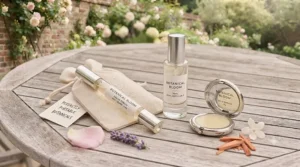
Fresh Summer Perfume vs Winter-Weight Fragrance: What Actually Changes
The gap between a fresh summer perfume and a heavier winter-weight fragrance isn’t really about quality, it’s about which molecules the composition leans on and how those molecules behave once skin warms up.
Winter fragrances typically lean on oud, amber, heavy vanilla and rich woods, ingredients with low volatility that release slowly and steadily, which is precisely why they feel comforting in cold weather and can feel genuinely overwhelming once summer heat accelerates their evaporation rate. A fragrance built around these heavier base notes essentially gets forced to release everything faster than intended once the temperature rises, which is why a beloved winter signature scent can smell cloying or headache-inducing on a hot summer day, it’s not a different fragrance, it’s the same fragrance behaving differently under different chemistry.
Light summer fragrances, by contrast, are deliberately weighted toward the volatile end from the start, citrus, aquatic and green top notes with comparatively restrained middle and base structures, so there’s simply less heavy material to become overwhelming even as heat speeds everything up. This is precisely why swapping fragrances seasonally isn’t really an aesthetic preference so much as a practical response to genuine chemistry, the same molecular structure that reads as cosy in December can read as cloying in July, purely because of how temperature interacts with volatility.
Fragrance Concentration Explained: EDT, EDP and Cologne
Concentration matters as much as note family when hunting for a genuine fresh summer perfume, since it directly determines how a fragrance behaves once heat gets involved. Eau de Toilette (EDT) typically contains around 5-15% fragrance oil diluted in alcohol, cologne sits lower still, often 2-5%, while Eau de Parfum (EDP) runs considerably richer at roughly 15-20%. Six of the seven fragrances in this guide are EDT or cologne specifically, not by accident, lower oil concentration means less raw material available to turn heavy once skin temperature rises, which is precisely the quality that makes a fragrance feel appropriately light in summer heat.
This is also why reformulating a favourite EDP into an EDT of the same name, common practice for popular fragrances, isn’t simply a cheaper version of the same scent. Lower concentration formulations often lean the composition further toward the top and middle notes specifically, since there’s proportionally less oil to sustain a heavy base through a full evaporation cycle. What most buyers overlook is that choosing cologne or EDT over EDP for summer wear isn’t a downgrade, it’s matching the format to the season deliberately, the same way a heavier EDP genuinely does make more sense once autumn and winter arrive and skin temperature drops.
Long-Term Fragrance Care: Storing Summer Scents Properly
A bottle of light summer fragrance is a genuinely fragile thing chemically, and how it’s stored between uses affects how it performs considerably more than most buyers realise. Heat and UV light are the two biggest threats specifically, both accelerate the same volatility that makes a fragrance smell fresh on skin, except in the bottle, that process simply degrades the composition rather than creating anything pleasant.
A cool, dark drawer or cupboard, away from radiators, windowsills and bathroom steam, keeps any of the seven fragrances in this guide performing consistently for years rather than months. Bathrooms specifically are a common storage mistake, the repeated heat and humidity cycles from showering genuinely do shorten a fragrance’s usable life compared with a bedroom drawer, even though the bathroom cabinet is where most people instinctively keep their fragrance collection. For fragrances travelling with you, the same principle applies at a smaller scale, a hot car boot or direct sunlight through a hotel window will noticeably degrade a bottle faster than the equivalent time spent at home in proper storage.
Signs a light summer fragrance has degraded from poor storage include a noticeably different smell from when it was purchased, a colour shift toward darker or cloudier liquid, or visible separation within the bottle. None of the seven fragrances in this guide need special handling beyond basic common sense, keep them cool, keep them dark, and they’ll perform reliably through multiple summers rather than fading within one.
Common Mistakes When Buying a Light Summer Fragrance
The single most common mistake is buying based purely on the in-store test strip impression without waiting to smell the heart notes. A fragrance’s top notes are, almost by design, its most immediately impressive and least representative element, so judging the whole composition on a five-minute strip test consistently leads to disappointment once it’s actually worn through a full day.
A close second is assuming “light” automatically means “long-lasting is impossible.” Fragrances like Davidoff Cool Water and Giorgio Armani Acqua di Gio demonstrate that a genuinely light, summer-appropriate composition can still be built with enough middle and base structure to carry reasonably well through several hours, the two qualities aren’t mutually exclusive, they simply require more careful composition.
Buyers also frequently over-apply light fragrances specifically to compensate for perceived shorter longevity, when the more effective approach is usually a smaller amount applied to more pulse points, plus a small travel bottle for reapplication later in the day, rather than drenching a single application.
Finally, many buyers underestimate how much bottle size and packaging matter for actual usage patterns. Buying a large 100ml bottle of an expensive fragrance you then feel reluctant to use liberally, precisely the situation summer wear demands, often works out worse value than a smaller bottle you’re happy to reapply generously through a hot day.
Holiday-Friendly Bottles: Packing Fragrance for Travel
Holiday-friendly bottles genuinely need to satisfy two separate constraints: they need to fit within airport liquid rules, and they need to survive the temperature swings of actual travel, from a hot car boot to an aircraft hold, without degrading. The UK Civil Aviation Authority confirms that current regulations forbid carrying liquids in containers larger than 100ml through hand luggage security at most UK airports, though a small number of airports have begun permitting larger containers following new scanner technology, so it’s worth checking your specific departure airport before assuming either rule applies.
This is precisely why the smaller-format picks on this list earn their place. The The Body Shop Moringa at 30ml and the unboxed 30ml Jo Malone Lime Basil & Mandarin both sit comfortably within the traditional 100ml allowance most UK airports still enforce, meaning neither needs decanting into a smaller travel atomiser, a process that can introduce air and accelerate oxidation in fragrances that weren’t designed to sit in a half-empty container.
For fragrances only available in larger bottles, a proper glass or metal travel atomiser, filled just before departure rather than weeks in advance, protects both the fragrance and your luggage allowance. Avoid leaving any fragrance, travel-sized or otherwise, in checked luggage that might sit in a hot aircraft hold or an even hotter car boot at the other end, since prolonged heat exposure genuinely does degrade fragrance quality over time, the same volatility that makes a light summer fragrance smell great on skin works against it in storage.
✨ Ready to Pack Your Perfect Summer Scent?
🔍 Pick the fragrance and bottle size that matches your travel plans and daily routine from the comparison above, click through to check current pricing and availability, and get your summer scent sorted properly. The right light summer fragrance, chosen with the chemistry in mind rather than just the marketing, tends to be the one you’re still happy to reach for every hot day.
FAQ
❓ What is the best light summer fragrance for UK weather?
❓ Why does my perfume smell stronger but fade faster in summer heat?
❓ What size perfume bottle can I take in hand luggage?
❓ Are citrus or aquatic fragrances better for hot weather?
❓ How many sprays of a light summer fragrance should I apply?
Conclusion
There’s no single “best” light summer fragrance because there’s no single situation this guide is written for. If you’re testing whether citrus, aromatic fragrances suit you at all, the Adidas Ice Dive removes any financial risk from finding out. If you want a genuinely proven aquatic classic that’s stood up to decades of summer wear, Davidoff Cool Water earns its reputation honestly. And if you’re chasing something with real depth that bridges daytime and evening wear, Giorgio Armani Acqua di Gio and Dolce & Gabbana Light Blue both justify their higher price tags through decades of consistent performance, not just brand recognition.
What matters most is understanding the chemistry working underneath the marketing, top notes will always fade first, heat will always accelerate that process, and no light summer fragrance is designed to survive twelve hours unassisted the way a heavier winter composition might. Match the note family to your environment, the concentration to how you’ll actually wear it, and the bottle size to whether it’s staying on your dresser or travelling with you, and the aggregated reviews for recurring themes rather than relying on star ratings alone. A well-chosen light summer fragrance, any of the seven covered here, tends to become the scent you reach for without thinking, which is really the whole point.
✨ Ready to Find Your Summer Scent?
🔍 Pick the fragrance that matches your budget and note preference from the comparison above, click through to check current pricing and availability, and get your summer collection sorted properly. The right light summer fragrance, chosen honestly rather than on brand name alone, tends to be the one you’re still happily reapplying come August.
Recommended for You
- Affordable Everyday Fragrance: 7 Best Value Picks for 2026 (UK)
- Daily Cologne for Men Under £40: 7 Picks That Earn Their Spot (2026)
- 7 Best everyday perfume for women Picks (2026 UK Guide) — Loved & Overhyped
Disclaimer: This article contains affiliate links. As an Amazon Associate, I earn from qualifying purchases. If you purchase products through these links, we may earn a small commission at no additional cost to you.
✨ Found this helpful? Share it with your friends! 💬🤗
